
When international buyers evaluate Chinese used EVs for export, most focus on range, charging speed, and price. But a transformative feature is quietly revolutionizing how EVs integrate into daily life: Vehicle-to-Load (V2L) and Vehicle-to-Grid (V2G) capabilities that turn electric vehicles into mobile power stations.
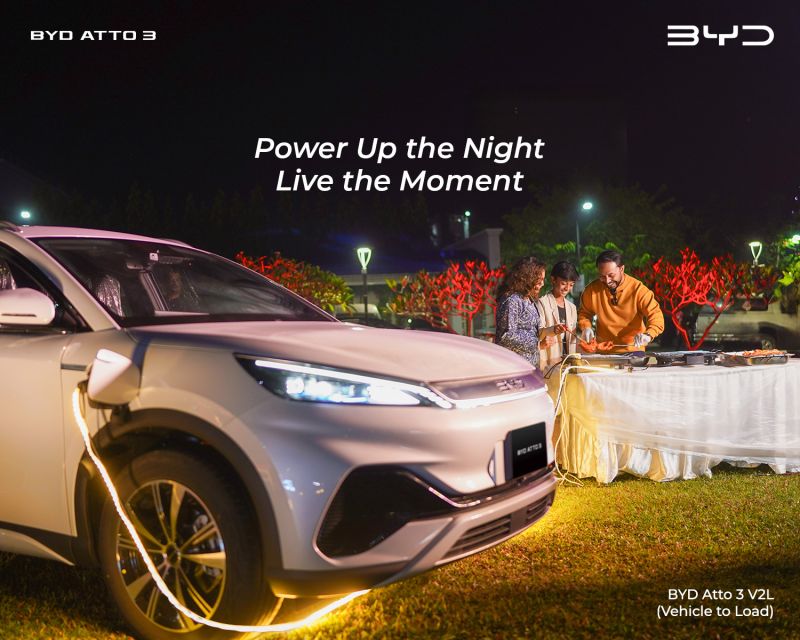
Imagine powering your entire home during a blackout using your BYD Seal's 82kWh battery. Or running power tools at a remote construction site from your XPeng G9. Or even selling electricity back to the grid during peak demand hours with your NIO ET7, earning money while your car sits parked. These aren't futuristic concepts—they're available features on Chinese EVs today, and they're transforming the value proposition for overseas markets.
For export businesses and international buyers, V2L and V2G capabilities represent a powerful differentiation strategy. In markets with unreliable grids (developing countries), frequent power outages (extreme weather regions), or high electricity costs (peak demand pricing), these features can justify premium pricing and accelerate EV adoption. This comprehensive guide examines how V2L and V2G work, which Chinese brands offer the best implementations, and how to position these capabilities for maximum market impact.
Understanding V2L and V2G: The Technical Foundation
Vehicle-to-Load (V2L): Your EV as a Portable Generator
What is V2L?
Vehicle-to-Load allows an EV to export power through standard electrical outlets, functioning as a mobile generator. The vehicle's high-voltage battery (typically 400V or 800V) is converted to standard household voltage (110V/220V AC) through an onboard inverter.
Technical Specifications: - Power Output: Typically 3.3kW to 6kW (some models up to 10kW) - Voltage: 220V AC (international) or 110V AC (North America) - Connection: External adapter port or built-in outlets - Usable Capacity: 80-90% of total battery capacity (battery management reserves 10-20%)
Practical Capacity Examples: - BYD Seal (82kWh battery): ~70kWh usable for V2L = 10-20 hours of home power - XPeng G9 (98kWh battery): ~85kWh usable for V2L = 12-25 hours of home power - NIO ET7 (100kWh battery): ~90kWh usable for V2L = 13-27 hours of home power 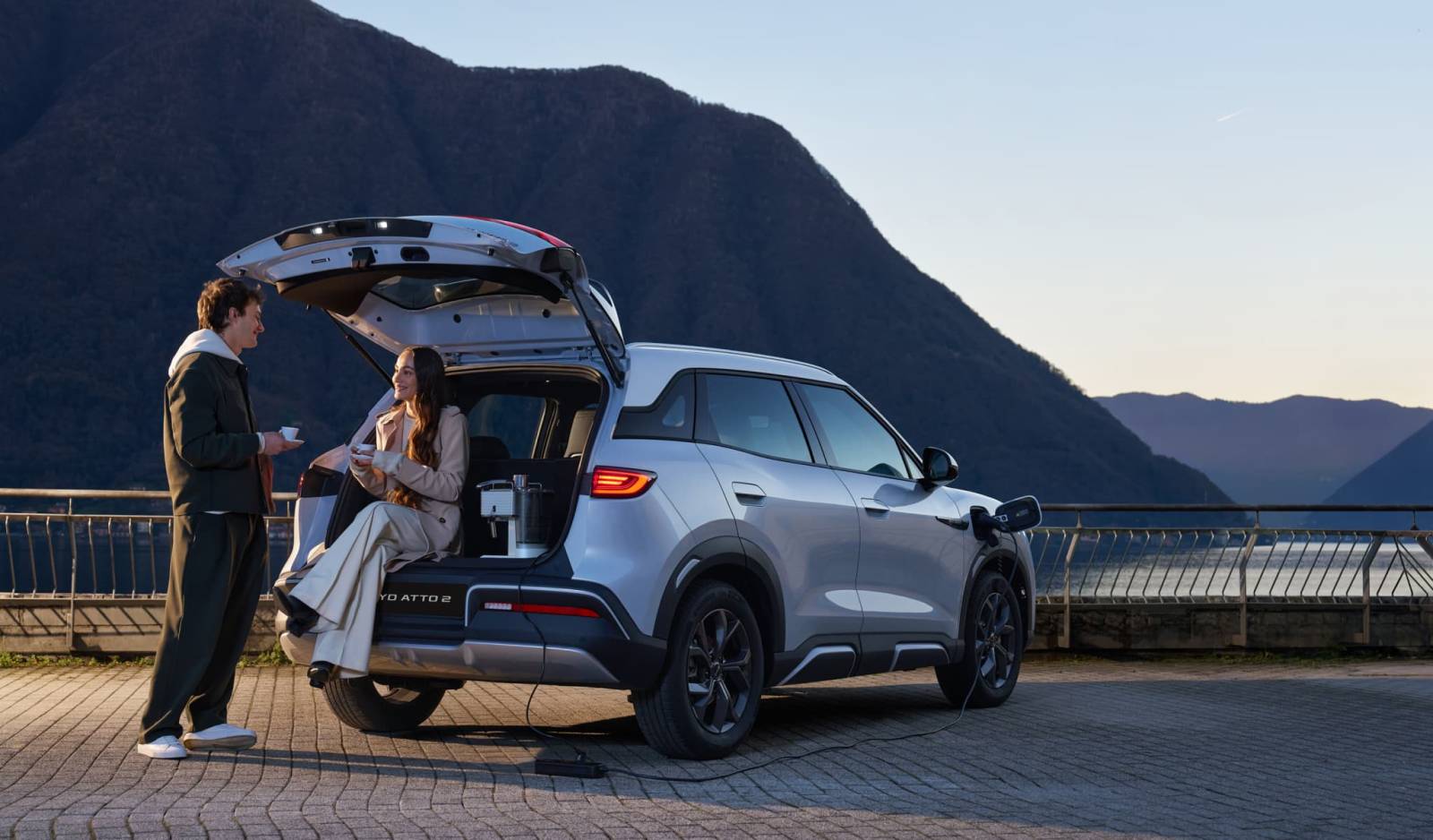 Common Use Cases: - Emergency home backup power during outages - Outdoor activities (camping, tailgating, outdoor events) - Remote work sites (construction, film production, agriculture) - Mobile businesses (food trucks, mobile clinics, pop-up shops) - Disaster relief and emergency response
Vehicle-to-Grid (V2G): Your EV as Grid Storage
What is V2G?
Vehicle-to-Grid is a bidirectional charging system that allows EVs to not only draw power from the grid but also send power back. This enables EVs to function as distributed energy storage, helping stabilize the grid and allowing owners to profit from electricity arbitrage.
Technical Requirements: - Bidirectional Charger: Special DC charger that can both charge and discharge - Grid Integration: Communication protocol (ISO 15118, CHAdeMO, GB/T) for grid coordination - Smart Metering: Real-time pricing and demand monitoring - Battery Management: Sophisticated algorithms to preserve battery health
Economic Model: - Buy Low: Charge during off-peak hours (cheap electricity, often renewable surplus) - Sell High: Discharge during peak demand hours (expensive electricity) - Grid Services: Earn payments for frequency regulation and grid stabilization
V2G Revenue Potential (example: UK market): - Off-peak charging: £0.07/kWh (2am-6am) - Peak discharge: £0.35/kWh (5pm-8pm) - Daily cycle: 30kWh (charge 30kWh at £2.10, sell 27kWh at £9.45 after losses) - Daily profit: £7.35 × 250 days/year = £1,837 annual revenue - Battery degradation cost: ~£400/year - Net annual profit: ~£1,400 ($1,750 USD)
Vehicle-to-Home (V2H): Integrated Home Energy Management
What is V2H?
Vehicle-to-Home is a specialized V2G application where the EV integrates directly with home energy systems, automatically managing power flow between vehicle, home, solar panels, and grid.
Advanced Features: - Automatic Backup: Seamless transition to EV power during outages - Solar Integration: Store excess solar generation in EV battery - Load Management: Prioritize critical loads during backup mode - Time-of-Use Optimization: Automatically charge/discharge based on electricity pricing
System Components: - Bidirectional home charger (7-22kW) - Home energy management system - Smart meter with time-of-use pricing - Optional solar PV integration
Chinese EV Brands: V2L and V2G Implementation Analysis
BYD (比亚迪): V2L Standard, V2G Coming
V2L Implementation:
BYD has made V2L standard across most of its lineup, positioning it as a key differentiator:
V2L-Equipped Models: - Seal: 3.3kW V2L standard (external adapter), 6kW optional - Han EV: 3.3kW V2L standard - Tang EV: 3.3kW V2L standard, 6kW on premium trims - Atto 3: 3.3kW V2L standard (varies by market) - Dolphin: 3.3kW V2L (not available in all markets)
BYD V2L Specifications: - Power Output: 3.3kW standard, 6kW optional - Voltage: 220V AC (50Hz) international, 110V AC (60Hz) North America - Connection: External adapter plugs into charging port - Outlets: Adapter provides 2-3 standard outlets - Safety: Automatic shutoff at 20% battery to preserve driving range
V2L Use Case Marketing (BYD's positioning): - Emergency Backup: "Power your home for 2-3 days during outages" - Outdoor Adventure: "Take your power anywhere—camping, beach, tailgating" - Work Site: "Professional-grade power for tools and equipment"
V2G Status: - Currently not available on production models - BYD announced V2G pilot programs in Europe (UK, Netherlands) for 2026 - Blade Battery's long cycle life (3,000+ cycles) makes it ideal for V2G - Expected rollout: 2026-2027 in markets with V2G infrastructure
Export Consideration: BYD's widespread V2L availability makes it excellent for markets with unreliable grids or outdoor recreation focus. Verify V2L inclusion by market (some regions exclude it for cost reasons).
NIO (蔚来): V2L Standard, V2G Pilot Programs Active
V2L Implementation:
NIO includes V2L across its entire lineup as standard equipment:
V2L-Equipped Models: - ET7, ET5, ET5T: 3kW V2L standard - ES7, ES8, ES6: 3kW V2L standard - EC7, EC6: 3kW V2L standard
NIO V2L Specifications: - Power Output: 3kW continuous - Voltage: 220V AC (50Hz) - Connection: Dedicated V2L port (separate from charging port) - Outlets: Built-in outlet in vehicle (no external adapter needed) - Smart Features: App control, scheduled discharge, battery reserve settings
V2G Implementation:
NIO is ahead of most Chinese brands in V2G deployment:
V2G Pilot Programs: - Norway: Active V2G pilot with Enel X (2024-2026) - Netherlands: Partnership with Jedlix for V2G services - China: Selected cities testing V2G with State Grid Corporation
NIO V2G Advantages: - Battery Swap Integration: Swap to fresh battery if V2G depletes your pack - Multiple Battery Sizes: 75kWh, 100kWh, 150kWh options optimize V2G economics - BaaS Model: Battery-as-a-Service separates battery ownership, reducing V2G degradation concerns
V2G Revenue Sharing (NIO's model): - NIO retains 30% of V2G revenue to cover battery degradation - User receives 70% of grid services revenue - Battery swap credits offset degradation costs - Estimated user revenue: €800-1,200/year in European markets
Export Consideration: NIO's V2G readiness makes it ideal for markets with active V2G programs (UK, Netherlands, Denmark, California). Battery swap infrastructure (China-only currently) provides unique V2G advantage domestically.
XPeng (小鹏): High-Power V2L, V2G Development
V2L Implementation:
XPeng offers industry-leading V2L power output:
V2L-Equipped Models: - G9: 3.3kW V2L standard, 6.6kW optional (highest in class) - P7/P7i: 3.3kW V2L standard - G6: 3.3kW V2L standard - P5: 2.2kW V2L (lower-power implementation)
XPeng G9 V2L Highlight: - 6.6kW Output: Can power entire home (average home uses 1-2kW baseline) - 800V Architecture: More efficient DC-AC conversion - Fast Recovery: 800V fast charging means quick "refueling" after V2L use - Smart Home Integration: XPeng app coordinates with smart home systems
V2L Use Cases (XPeng's marketing): - Home Backup: "Power your entire home, not just essentials" - RV/Camping: "Replace noisy, polluting generators" - Professional Use: "Run heavy equipment—welders, compressors, power tools"
V2G Status: - V2G hardware-ready on G9 and G6 (800V platform supports bidirectional charging) - Software and grid integration in development - Expected V2G launch: 2026 in China, 2027 internationally
Export Consideration: XPeng's high-power V2L (especially G9's 6.6kW) is excellent for markets where EVs replace generators (construction, events, rural areas). 800V architecture future-proofs for V2G.
Li Auto (理想): V2L Standard, EREV Advantage
V2L Implementation:
Li Auto's EREV (Extended Range Electric Vehicle) architecture provides unique V2L advantages:
V2L-Equipped Models: - L9: 3.3kW V2L standard - L8: 3.3kW V2L standard - L7: 3.3kW V2L standard
EREV V2L Advantage: - Unlimited Runtime: Range extender can run indefinitely with gasoline - No Range Anxiety: V2L use doesn't compromise driving range - Automatic Recharge: Range extender automatically maintains battery level during V2L use - Higher Total Capacity: Battery + fuel tank = equivalent to 200+ kWh
Practical Implications: - Can power home for weeks during extended outages (limited only by gasoline supply) - Ideal for disaster relief and emergency response - Perfect for remote work sites with no grid access - Functions as true backup generator replacement
V2G Status: - Not currently planned (EREV architecture complicates grid integration) - V2L focus aligns with Li Auto's "family SUV" positioning
Export Consideration: Li Auto's EREV V2L is unmatched for markets with unreliable grids or disaster-prone regions. The ability to provide unlimited power (with gasoline) is a unique selling point.
Other Chinese Brands
Geely/Zeekr: - Zeekr 001: 3.3kW V2L standard - Zeekr 009: 3.3kW V2L standard - Geometry series: V2L not standard (varies by model)
SAIC (MG Brand): - MG4: V2L not available - MG ZS EV: V2L not available - MG Marvel R: 3kW V2L (China market only)
Great Wall (ORA, Tank): - Tank 500 PHEV: 3.3kW V2L - ORA Good Cat: V2L not available
Regional Market Analysis: Where V2L/V2G Add Maximum Value
High-Value Markets for V2L
1. Developing Countries with Unreliable Grids
Target Markets: Southeast Asia (Philippines, Indonesia, Vietnam), Africa (Nigeria, Kenya, South Africa), Latin America (Brazil, Mexico)
Value Proposition: - Replace expensive, polluting diesel generators - Provide reliable power for home businesses - Enable work-from-home during frequent outages - Support medical equipment during power failures
Pricing Impact: V2L capability can justify 5-10% price premium in these markets
Best Models: - BYD Seal/Tang (large battery, reliable V2L) - Li Auto L7/L8/L9 (unlimited runtime with range extender) - XPeng G9 (high power output for heavy loads)
2. Outdoor Recreation Markets
Target Markets: Australia, New Zealand, Canada, Nordic countries, Western US
Value Proposition: - Replace RV generators (quieter, cleaner, more convenient) - Enable off-grid camping and adventure travel - Power outdoor events and gatherings - Support mobile businesses (food trucks, mobile services)
Pricing Impact: V2L can justify 3-5% premium for outdoor enthusiasts
Best Models: - BYD Seal/Atto 3 (good balance of range and V2L) - XPeng G9 (high power for RV appliances) - NIO ES7/ES8 (luxury SUV positioning for premium outdoor market)
3. Disaster-Prone Regions
Target Markets: Japan (earthquakes), US Gulf Coast/Florida (hurricanes), California (wildfires/grid shutoffs)
Value Proposition: - Emergency backup power during natural disasters - Grid independence during Public Safety Power Shutoffs (PSPS) - Community resilience (share power with neighbors) - Peace of mind for families with medical needs
Pricing Impact: V2L can justify 8-12% premium in disaster-prone areas
Best Models: - Li Auto L7/L8/L9 (unlimited runtime for extended outages) - BYD Tang (large 108kWh battery for multi-day backup) - XPeng G9 (6.6kW output powers entire home)
High-Value Markets for V2G
1. Markets with Time-of-Use Electricity Pricing
Target Markets: UK, Netherlands, Denmark, California, Australia (selected regions)
Value Proposition: - Earn £800-1,500/year through electricity arbitrage - Reduce home electricity costs by 30-50% - Support renewable energy integration - Participate in grid stabilization programs
Pricing Impact: V2G capability can justify 10-15% premium with clear ROI messaging
Best Models: - NIO ET5/ET7 (active V2G programs, BaaS model reduces degradation concern) - XPeng G9/G6 (V2G-ready 800V platform) - BYD Seal/Han (when V2G launches, Blade Battery's long cycle life ideal)
2. Markets with High Renewable Penetration
Target Markets: Germany, Spain, Portugal, Scotland, South Australia
Value Proposition: - Store cheap solar/wind energy for evening use - Reduce grid stress during renewable generation peaks - Maximize self-consumption of home solar - Earn grid services revenue
Pricing Impact: V2G + solar integration can justify 12-18% premium
Best Models: - NIO (V2G-ready with pilot programs) - XPeng G9/G6 (800V fast charging enables multiple daily cycles)
3. Markets with Grid Stability Challenges
Target Markets: Texas (ERCOT grid), California (summer peaks), UK (winter peaks)
Value Proposition: - Earn premium payments for grid stabilization services - Reduce risk of blackouts through distributed storage - Support grid during extreme weather events - Participate in demand response programs
Pricing Impact: V2G grid services can justify 10-15% premium
Best Models: - NIO (proven V2G programs) - Large-battery variants (100kWh+) for maximum grid services capacity
Practical Implementation Guide for Export Businesses
V2L Marketing Strategies
1. Demonstrate Real-World Use Cases
Effective Demonstrations: - Home Backup: Show EV powering refrigerator, lights, WiFi, TV during simulated outage - Outdoor Event: Power sound system, lighting, food preparation equipment at outdoor venue - Construction Site: Run power tools, compressor, work lights from EV - Camping: Set up complete campsite with electric cooking, heating, entertainment
Marketing Materials: - Video demonstrations of V2L in action - Infographics showing "hours of power" for common appliances - Comparison charts: EV V2L vs. gasoline generator (cost, noise, emissions) - Customer testimonials from real V2L users
2. Calculate and Communicate Value
V2L Value Calculator (provide to customers): - Generator Replacement: Diesel generator cost (¥5,000-15,000) + fuel + maintenance - Backup Power: Cost of outages (spoiled food, lost productivity, hotel stays) - Convenience: No need to store, maintain, or fuel separate generator
Example Value Proposition: "The BYD Seal's V2L capability replaces a ¥10,000 backup generator, provides 20 hours of emergency power, and enables unlimited outdoor adventures—all included in the vehicle price."
3. Address Common Concerns
Battery Degradation: - "V2L uses the same battery chemistry as driving—no additional degradation" - "BYD's Blade Battery is rated for 3,000+ cycles—V2L use is negligible" - "Most users discharge <10% for V2L, equivalent to 10km of driving"
Range Anxiety: - "V2L automatically stops at 20% battery to preserve 100km driving range" - "You control the discharge limit through the app" - "For extended V2L use, plan charging like you plan refueling"
Safety: - "Automatic ground fault protection" - "Overload protection prevents damage" - "Same safety standards as home electrical systems"
V2G Program Development
1. Partner with Utilities and Aggregators
Key Partners: - Utilities: Direct programs with local power companies - V2G Aggregators: Enel X, Nuvve, Jedlix, OVO Energy - Energy Management: Home energy system providers (Tesla Powerwall competitors)
Partnership Benefits: - Access to V2G infrastructure and software - Customer acquisition through utility channels - Revenue sharing arrangements - Technical support and grid integration
2. Educate Customers on V2G Economics
V2G ROI Calculator: - Initial Investment: Bidirectional charger (¥15,000-30,000) - Annual Revenue: £800-1,500 (UK), $1,000-2,000 (California) - Payback Period: 2-3 years - 10-Year Value: £8,000-15,000 net profit
Financing Options: - Bundle bidirectional charger with vehicle financing - Utility rebates for V2G participation (many markets offer ¥5,000-10,000) - Lease programs where utility owns charger
3. Address V2G Concerns
Battery Degradation: - "NIO's BaaS model means you don't own the battery—degradation is NIO's concern" - "V2G programs limit cycles to preserve battery health (typically 1 cycle/day max)" - "Modern batteries are designed for 3,000+ cycles—V2G uses a fraction of this"
Complexity: - "Fully automated—set your preferences once, system handles everything" - "App shows real-time earnings and battery status" - "No manual intervention required"
Grid Dependency: - "You set minimum battery level (e.g., always keep 50% for driving)" - "Override V2G anytime through app" - "System learns your driving patterns and reserves range accordingly"
Future Trends: The Evolution of Vehicle-Grid Integration
Bidirectional Charging Standardization
ISO 15118-20 (International Standard): - Plug & Charge with bidirectional capability - Automatic authentication and billing - Expected widespread adoption: 2026-2028
CHAdeMO 3.0: - Up to 500kW bidirectional charging - Already deployed in Japan - Limited adoption outside Asia
CCS Bidirectional: - European and North American standard - Slower rollout than CHAdeMO - Expected mainstream availability: 2027-2029
Chinese GB/T Bidirectional: - China's national standard - Rapid domestic deployment - Export models may support multiple standards
Vehicle-to-Everything (V2X)
Expanded Capabilities: - V2V (Vehicle-to-Vehicle): Share power between EVs - V2B (Vehicle-to-Building): Power commercial buildings during peak demand - V2C (Vehicle-to-Community): Neighborhood microgrids during outages
Chinese Innovations: - BYD developing V2V charging for emergency roadside assistance - NIO's battery swap stations as community energy hubs - XPeng exploring V2B for commercial fleet customers
AI-Powered Energy Management
Smart V2G Optimization: - Machine learning predicts electricity prices - Automatic optimization of charge/discharge cycles - Integration with weather forecasts (solar production, heating/cooling demand) - Coordination with home solar and battery storage
NIO's AI Energy Management: - Learns user driving patterns - Optimizes V2G participation without compromising mobility - Predicts optimal battery swap timing for V2G users
XPeng's Smart Home Integration: - Coordinates EV, home battery, solar panels, and grid - Minimizes electricity costs through intelligent load management - Provides energy independence scoring and recommendations
Actionable Recommendations
For Export Businesses
1. Prioritize V2L in Target Markets: Build inventory around V2L-equipped models for markets with unreliable grids, outdoor recreation focus, or disaster risk.
2. Create Market-Specific Messaging: Tailor V2L/V2G value propositions to local needs (backup power vs. outdoor adventure vs. grid services revenue).
3. Demonstrate Capabilities: Invest in V2L demonstration equipment. Live demonstrations are far more effective than specifications.
4. Partner with Complementary Services: Collaborate with solar installers, home energy companies, and utilities to create integrated solutions.
5. Educate Sales Teams: Ensure sales staff can explain V2L/V2G, demonstrate features, and calculate customer-specific value.
For Individual Buyers
1. Assess Your Needs: Do you experience frequent outages? Enjoy outdoor activities? Have time-of-use electricity pricing? V2L/V2G value varies dramatically by use case.
2. Verify Specifications: Not all V2L implementations are equal. Check power output (3.3kW vs. 6.6kW), connection type (adapter vs. built-in), and software features.
3. Consider Future V2G: If your market is developing V2G programs, choose V2G-ready vehicles (NIO, XPeng 800V models) even if not immediately using V2G.
4. Calculate ROI: For V2G, run the numbers. Bidirectional charger costs ¥15,000-30,000 but can generate £800-1,500/year in suitable markets.
5. Plan Infrastructure: V2L works immediately, but V2G requires bidirectional charger installation. Factor this into total cost.
Conclusion: The Power Station in Your Driveway
V2L and V2G capabilities transform electric vehicles from mere transportation into versatile energy assets. For international markets, these features address real pain points—unreliable grids, expensive backup power, high electricity costs—while opening new revenue streams and use cases.
Chinese EV manufacturers have embraced V2L/V2G more aggressively than most Western brands. BYD's standard V2L across its lineup, NIO's active V2G pilot programs, XPeng's industry-leading 6.6kW output, and Li Auto's unlimited-runtime EREV V2L provide compelling advantages for export markets.
For export businesses, V2L and V2G represent powerful differentiation strategies. In the right markets, these features can justify 5-15% price premiums, accelerate sales cycles, and create loyal customers who view their EVs as essential home infrastructure rather than just vehicles.
The future of EVs isn't just about transportation—it's about energy independence, grid resilience, and financial optimization. Chinese EVs with advanced V2L and V2G capabilities are leading this transformation, turning every driveway into a potential power station and every EV owner into an energy prosumer.
For more insights on selecting Chinese EVs with advanced features, explore our guide to top affordable China used car models for city driving.
---
About WinMinCar: We specialize in connecting international buyers with feature-rich Chinese electric vehicles, providing expert guidance on V2L/V2G capabilities, market positioning, and technical specifications. Our team evaluates vehicles across real-world use cases to provide practical implementation advice for export markets.