
Chinese EV Battery Technology vs Global Competition: Comprehensive 2026 Analysis
Introduction
The electric vehicle revolution has been fundamentally driven by advances in battery technology, and Chinese manufacturers have emerged as unexpected leaders in this critical field. What began as a manufacturing hub for international battery companies has evolved into a powerhouse of innovation, with Chinese firms now setting global standards for safety, efficiency, and cost-effectiveness in EV batteries.
The transformation of China's battery industry represents one of the most significant technological shifts in modern automotive history. Companies like BYD, CATL (Contemporary Amperex Technology), and others have not only achieved technological parity with established global players but have often surpassed them in key performance metrics. This evolution has profound implications for the global electric vehicle market and the broader transition to sustainable transportation.
Understanding how Chinese battery technology compares to global competitors is crucial for consumers, investors, and industry professionals alike. The differences extend beyond mere specifications to encompass manufacturing philosophy, safety approaches, cost structures, and long-term sustainability strategies. This comprehensive analysis examines these technologies across multiple dimensions, providing insights into current capabilities and future trajectories.
The Global Battery Technology Landscape
Historical Context and Market Evolution
The lithium-ion battery industry has undergone dramatic changes over the past decade. Initially dominated by Japanese companies like Panasonic and Sony, followed by South Korean giants LG Chem and Samsung SDI, the landscape has been fundamentally reshaped by the rapid rise of Chinese manufacturers. This shift reflects not just manufacturing scale but genuine technological innovation and strategic focus.
The early 2010s marked a turning point when Chinese companies began investing heavily in battery research and development, supported by government policies promoting electric vehicle adoption. Unlike their international counterparts who often had to balance multiple business segments, Chinese battery manufacturers could focus entirely on automotive applications, leading to rapid specialization and innovation.
Current Market Leaders and Their Approaches
Global Market Share (2026) - CATL (China): 32.5% - BYD (China): 16.8% - LG Energy Solution (South Korea): 14.2% - Panasonic (Japan): 10.1% - SK Innovation (South Korea): 7.8% - Tesla/Panasonic Partnership: 6.2% - Others: 12.4%
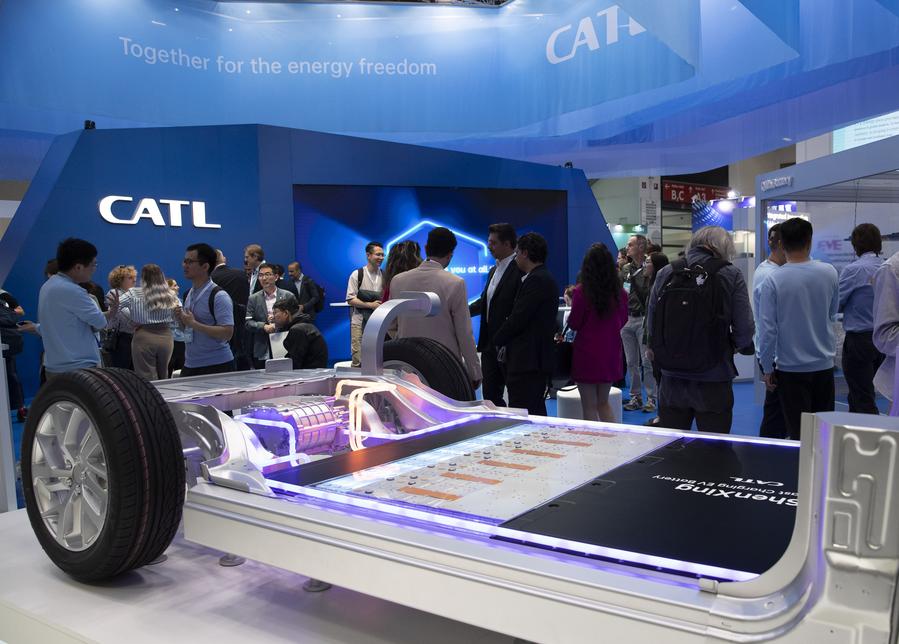
This market distribution reflects the dominance of Chinese manufacturers, who collectively control nearly 50% of the global EV battery market. However, market share alone doesn't tell the complete story of technological capabilities and competitive advantages.
Chinese Battery Technology Leaders
BYD: Pioneering Safety and Integration
Company Overview and Philosophy BYD's approach to battery technology is fundamentally different from most competitors. As both a battery manufacturer and vehicle producer, BYD has the unique advantage of designing batteries specifically for their own vehicles, enabling unprecedented integration and optimization. This vertical integration strategy has allowed BYD to innovate in ways that pure battery suppliers cannot.
Blade Battery Technology BYD's Blade Battery represents perhaps the most significant safety innovation in lithium-ion battery technology in recent years. The technology addresses one of the most persistent concerns about electric vehicles: battery safety and thermal runaway.
Technical Specifications: - Chemistry: Lithium Iron Phosphate (LFP) - Energy Density: 140 Wh/kg (cell level) - Cycle Life: Over 3,000 cycles (maintaining 80% capacity) - Operating Temperature: -30°C to 60°C - Safety Rating: Passes nail penetration test without fire or explosion
Key Innovations: - Structural Design: The blade-like cell structure maximizes space utilization while improving heat dissipation - Cell-to-Pack Integration: Eliminates traditional modules, reducing weight and complexity - Enhanced Safety: Inherent thermal stability of LFP chemistry combined with optimized cell design - Cost Efficiency: Simplified manufacturing process reduces production costs
Manufacturing and Scale BYD operates multiple gigafactories with combined annual capacity exceeding 200 GWh. Their manufacturing process emphasizes automation and quality control, with each battery undergoing extensive testing before installation. The company's vertical integration extends to raw material processing, giving them greater control over supply chains and costs.
CATL: Innovation Through Diversity
Company Profile and Strategy Contemporary Amperex Technology Co., Limited (CATL) has emerged as the world's largest battery manufacturer by focusing on technological diversity and customer partnerships. Unlike BYD's integrated approach, CATL operates as a supplier to multiple automotive manufacturers, requiring them to develop flexible, adaptable battery solutions.
Qilin Battery Technology CATL's latest innovation, the Qilin battery, represents a breakthrough in fast-charging capability and energy density.
Technical Achievements: - Energy Density: Up to 255 Wh/kg - Fast Charging: 10-80% in 10 minutes - Cycle Life: Over 1,000,000 kilometers - Thermal Management: Advanced cooling system integrated into cell structure
Innovative Features: - Multi-functional Elastic Interlayer: Provides both electrical insulation and thermal conduction - Micron-level Flat Heat Transfer Surface: Enables rapid heat dissipation - Integrated Cooling System: Coolant flows directly between cells for optimal temperature control
Technology Portfolio Diversity CATL maintains the broadest technology portfolio in the industry: - NCM (Nickel Cobalt Manganese): High energy density for premium vehicles - LFP (Lithium Iron Phosphate): Cost-effective and safe for mainstream vehicles - Sodium-ion: Next-generation technology for cost-sensitive applications - Solid-state: Under development for future ultra-high performance applications
Other Notable Chinese Battery Manufacturers
Gotion High-tech Specializes in LFP technology with focus on commercial vehicles and energy storage applications. Their semi-solid-state batteries achieve energy densities of 360 Wh/kg.
EVE Energy Known for cylindrical cell technology and partnerships with BMW and other premium manufacturers. Their 4680-format cells compete directly with Tesla's technology.
Sunwoda Focuses on consumer electronics and automotive applications, with particular strength in battery management systems and thermal management.
Global Competitors: Established Players
Tesla and Panasonic Partnership
Technology Approach The Tesla-Panasonic partnership represents one of the most successful collaborations in EV battery development. Their approach emphasizes manufacturing scale, cost reduction, and continuous incremental improvement.
Key Technologies: - 2170 Cells: Optimized for automotive applications with good energy density and thermal characteristics - 4680 Cells: Next-generation technology promising 5x energy improvement and 6x power improvement - Structural Battery Pack: Integration of battery pack into vehicle structure for weight and cost savings
Performance Metrics: - Energy Density: 260 Wh/kg (2170 cells) - Cycle Life: 1,500+ cycles - Fast Charging: 250 kW peak charging rate - Cost: Targeting $100/kWh at pack level
Manufacturing Innovation Tesla's Gigafactory approach has revolutionized battery manufacturing through: - Massive scale production reducing costs - Vertical integration of supply chain - Continuous process improvement - Advanced automation and quality control
LG Energy Solution
Global Strategy and Capabilities LG Energy Solution has established itself as a premier supplier to global automotive manufacturers through technological excellence and manufacturing quality.
Technology Portfolio: - NCM Chemistry: Industry-leading energy density and performance - NCMA (Nickel Cobalt Manganese Aluminum): Reduced cobalt content while maintaining performance - Next-generation Chemistries: Development of silicon nanowire anodes and solid-state electrolytes
Performance Characteristics: - Energy Density: Up to 275 Wh/kg - Fast Charging: 10-80% in 18 minutes - Cycle Life: 1,000+ cycles - Safety: Comprehensive thermal management and protection systems
Manufacturing Excellence LG Energy Solution operates facilities across multiple continents with focus on: - Consistent quality across all production sites - Advanced process control and monitoring - Sustainable manufacturing practices - Flexible production capabilities for different cell formats
SK Innovation and Samsung SDI
SK Innovation Focuses on high-nickel NCM chemistry for maximum energy density: - NCM 9: 90% nickel content for ultra-high energy density - Fast Charging: Advanced thermal management enables rapid charging - Safety Systems: Multi-layer protection against thermal runaway
Samsung SDI Emphasizes solid-state battery development and premium applications: - Solid-state Technology: Targeting commercialization by 2027 - High Energy Density: Current generation achieves 270 Wh/kg - Premium Focus: Partnerships with luxury automotive brands
Comparative Analysis: Key Performance Metrics
Energy Density Comparison
Energy density remains one of the most critical metrics for EV batteries, directly impacting vehicle range and weight.
Current Leaders (2026): 1. Samsung SDI NCM: 275 Wh/kg 2. LG Energy Solution NCMA: 270 Wh/kg 3. Tesla 4680: 260 Wh/kg 4. CATL Qilin: 255 Wh/kg 5. BYD Blade: 140 Wh/kg (LFP chemistry)
Analysis: While Chinese manufacturers don't lead in absolute energy density, they excel in practical energy density when considering safety, cost, and longevity. BYD's Blade Battery, despite lower energy density, offers superior safety characteristics and longer lifespan, making it highly competitive for many applications.
Safety Performance
Safety has become a key differentiator, with Chinese manufacturers often leading in this critical area.
Safety Test Results: - BYD Blade Battery: Passes nail penetration test without fire or explosion - CATL Qilin: Advanced thermal management prevents thermal runaway - Tesla/Panasonic: Good safety record with comprehensive battery management - LG Energy Solution: Multiple protection layers but some historical thermal issues - SK Innovation: Advanced thermal management systems
Chinese Advantage: Chinese manufacturers have prioritized safety as a primary design criterion, often accepting trade-offs in energy density to achieve superior safety performance. This approach has proven successful in building consumer confidence and regulatory approval.
Fast Charging Capabilities
Fast charging has become increasingly important for consumer adoption of electric vehicles.
Charging Speed Comparison: 1. CATL Qilin: 10-80% in 10 minutes 2. Tesla 4680: 10-80% in 15 minutes 3. LG Energy Solution: 10-80% in 18 minutes 4. BYD Blade: 10-80% in 25 minutes 5. Samsung SDI: 10-80% in 20 minutes
Technology Approaches: - Chinese manufacturers: Focus on thermal management and cell structure optimization - Global competitors: Emphasis on chemistry optimization and charging algorithms - Tesla: Integration of charging infrastructure with battery technology
Cycle Life and Durability
Long-term durability directly impacts total cost of ownership and environmental sustainability.
Cycle Life Comparison: - BYD Blade: 3,000+ cycles (80% capacity retention) - CATL: 1,000,000 km equivalent - Tesla/Panasonic: 1,500+ cycles - LG Energy Solution: 1,000+ cycles - Samsung SDI: 1,200+ cycles
Chinese Leadership: Chinese manufacturers, particularly BYD, lead in cycle life due to their focus on LFP chemistry and conservative design approaches. This translates to longer vehicle lifespans and better resale values.
Cost Effectiveness
Cost remains a crucial factor in EV adoption, with Chinese manufacturers holding significant advantages.
Cost Analysis ($/kWh at pack level): - BYD Blade: $85-95/kWh - CATL LFP: $90-100/kWh - Tesla/Panasonic: $110-120/kWh - LG Energy Solution: $120-130/kWh - Samsung SDI: $130-140/kWh
Cost Advantages of Chinese Manufacturers: - Vertical Integration: Control over supply chain reduces costs - Scale Manufacturing: Massive production volumes drive down unit costs - Government Support: Subsidies and incentives support R&D and manufacturing - Local Supply Chains: Reduced transportation and logistics costs
Technology Innovations and Breakthroughs
Chinese Innovations Leading the Industry
Structural Battery Packs Chinese manufacturers have pioneered the integration of battery cells directly into vehicle structure: - BYD: Cell-to-Pack (CTP) technology eliminates modules - CATL: Cell-to-Chassis (CTC) integration reduces weight by 10% - Benefits: Improved space utilization, reduced weight, lower costs
Advanced Thermal Management Chinese companies have developed sophisticated thermal management systems: - Immersion Cooling: Direct contact between coolant and cells - Phase Change Materials: Passive thermal regulation - Intelligent Thermal Control: AI-driven temperature optimization
Manufacturing Process Innovation - Dry Electrode Technology: Reduces manufacturing costs and environmental impact - Automated Assembly: Advanced robotics and quality control systems - Flexible Manufacturing: Ability to produce multiple cell formats on same line
Global Innovations Challenging Chinese Leadership
Solid-State Battery Development Global manufacturers are investing heavily in next-generation solid-state technology: - Toyota: Leading solid-state development with planned 2027 commercialization - Samsung SDI: Advanced solid-state prototypes achieving 900 Wh/kg - QuantumScape: Partnership with Volkswagen for solid-state technology
Silicon Nanowire Anodes - Sila Nanotechnologies: 20-40% capacity improvement over graphite anodes - Amprius: Silicon nanowire technology for high-energy applications - Tesla: Silicon-doped anodes in 4680 cells
Advanced Chemistry Development - Lithium-Metal Batteries: Potential for 50% energy density improvement - Lithium-Sulfur: Low-cost, high-energy density alternative - Sodium-Ion: CATL leading development for cost-sensitive applications
Manufacturing and Supply Chain Analysis
Chinese Manufacturing Advantages
Scale and Capacity Chinese manufacturers operate the world's largest battery production facilities: - CATL: 170 GWh annual capacity across multiple sites - BYD: 200+ GWh capacity with rapid expansion plans - Combined Chinese Capacity: Over 800 GWh annually
Supply Chain Integration Chinese companies control significant portions of the battery supply chain: - Raw Materials: Dominant in lithium processing and refining - Component Manufacturing: Leading production of separators, electrolytes, and other components - Equipment Manufacturing: Chinese companies produce most battery manufacturing equipment
Cost Structure Advantages - Labor Costs: Lower manufacturing labor costs - Energy Costs: Competitive industrial electricity rates - Government Support: Subsidies and tax incentives for manufacturing - Economies of Scale: Massive production volumes reduce unit costs
Global Manufacturing Strategies
Regional Production Global manufacturers are establishing regional production to compete: - LG Energy Solution: Facilities in US, Europe, and Asia - Samsung SDI: Global manufacturing footprint - Panasonic: Expansion beyond Japan to serve global markets
Technology Licensing Some companies focus on technology development while licensing manufacturing: - QuantumScape: Licensing solid-state technology - Sila Nanotechnologies: Partnering for silicon anode production
Strategic Partnerships - Ford-SK Innovation: Joint venture for US battery production - GM-LG Energy Solution: Ultium battery platform partnership - Stellantis-Samsung SDI: Joint venture for European production
Environmental and Sustainability Considerations
Chinese Approach to Sustainability
Battery Recycling Chinese manufacturers are developing comprehensive recycling programs: - CATL: Closed-loop recycling recovering 99.3% of materials - BYD: Integrated recycling facilities at manufacturing sites - Government Support: National policies promoting battery recycling
Sustainable Manufacturing - Renewable Energy: Increasing use of solar and wind power in manufacturing - Water Conservation: Advanced water treatment and recycling systems - Waste Reduction: Lean manufacturing principles minimizing waste
Raw Material Sourcing - Ethical Sourcing: Increasing focus on responsible mining practices - Supply Chain Transparency: Blockchain tracking of raw materials - Alternative Materials: Development of cobalt-free and nickel-reduced chemistries
Global Sustainability Initiatives
Carbon Neutral Manufacturing - Tesla: Commitment to carbon-neutral manufacturing by 2030 - LG Energy Solution: Renewable energy targets for all facilities - Samsung SDI: Comprehensive sustainability roadmap
Circular Economy - Second-Life Applications: Using EV batteries for stationary storage - Material Recovery: Advanced recycling technologies - Design for Recycling: Batteries designed for easy disassembly
Market Applications and Use Cases
Automotive Applications
Passenger Vehicles Different battery technologies serve different market segments: - Premium Vehicles: High energy density NCM batteries from global suppliers - Mainstream Vehicles: Cost-effective LFP batteries from Chinese manufacturers - Luxury EVs: Advanced thermal management and fast-charging capabilities
Commercial Vehicles Chinese manufacturers dominate commercial vehicle applications: - Electric Buses: BYD leads global market with LFP technology - Delivery Vehicles: CATL supplies batteries for logistics fleets - Heavy Trucks: Development of high-capacity battery systems
Energy Storage Applications
Grid-Scale Storage Chinese battery technology is increasingly used for utility-scale energy storage: - Cost Advantages: LFP technology ideal for stationary applications - Long Cycle Life: Suitable for daily charge/discharge cycles - Safety: Reduced fire risk important for grid applications
Residential Storage - Home Energy Systems: Integration with solar panels - Backup Power: Reliable power during outages - Peak Shaving: Reducing electricity costs through time-of-use optimization
Future Technology Roadmaps
Chinese Development Priorities
Next-Generation LFP Chinese manufacturers continue improving LFP technology: - Energy Density Improvements: Targeting 200 Wh/kg by 2028 - Fast Charging: Sub-10 minute charging capabilities - Cost Reduction: Further manufacturing optimization
Solid-State Development - CATL: Solid-state batteries planned for 2027 commercialization - BYD: Semi-solid-state technology as intermediate step - Timeline: Commercial deployment expected by 2028-2030
Alternative Chemistries - Sodium-Ion: CATL leading commercialization for cost-sensitive applications - Lithium-Metal: Research partnerships with universities and institutes - Advanced Materials: Exploration of new cathode and anode materials
Global Technology Roadmaps
Solid-State Leadership Global manufacturers focusing on solid-state as competitive advantage: - Toyota: Most advanced solid-state development program - Samsung SDI: Targeting 2027 commercialization - QuantumScape: Partnerships for manufacturing scale-up
Advanced Chemistry Development - Silicon Anodes: Commercialization by 2025-2026 - Lithium-Metal: Potential breakthrough technology - New Cathode Materials: Reduced cobalt and nickel content
Consumer and Market Implications
Impact on Vehicle Pricing
Cost Advantages of Chinese Batteries The cost advantages of Chinese battery technology translate directly to vehicle pricing: - Lower Battery Costs: 20-30% cost advantage enables more affordable EVs - Market Expansion: Accessible pricing drives broader EV adoption - Competitive Pressure: Forces global manufacturers to reduce costs
Performance Trade-offs
Consumer Considerations Different battery technologies offer different advantages: - Chinese LFP: Superior safety and longevity, lower energy density - Global NCM: Higher energy density, higher cost, more complex thermal management - Application Suitability: Different technologies optimal for different use cases
Availability and Access
For consumers interested in exploring vehicles with advanced Chinese battery technology, understanding electric vehicle options from major Chinese automakers can provide valuable insights into available models and their battery specifications.
Those looking to purchase these vehicles should also consider finding affordable electric car dealerships from emerging brands to locate authorized dealers and service centers.
For buyers specifically interested in SUV options, our guide to the best used Chinese electric SUVs in 2026 offers detailed comparisons of battery performance and overall value propositions.
Challenges and Limitations
Chinese Technology Challenges
Energy Density Gap While Chinese manufacturers excel in safety and cost, they still lag in absolute energy density: - LFP Limitations: Inherent energy density limitations of iron phosphate chemistry - Weight Penalties: Lower energy density requires larger, heavier battery packs - Range Impact: Affects vehicle range, particularly in compact vehicles
Thermal Management Complexity Advanced thermal management systems add complexity and cost: - System Integration: Complex cooling systems require sophisticated control - Maintenance Requirements: More complex systems may require specialized service - Cost Impact: Advanced thermal management increases manufacturing costs
Global Competitor Challenges
Cost Competitiveness Global manufacturers face significant cost pressures: - Manufacturing Costs: Higher labor and facility costs - Supply Chain: Less integrated supply chains increase costs - Scale Disadvantages: Smaller production volumes limit cost reductions
Technology Differentiation Maintaining technological advantages becomes increasingly difficult: - Rapid Chinese Innovation: Chinese manufacturers closing technology gaps quickly - Patent Challenges: Intellectual property protection in global markets - Market Access: Chinese manufacturers gaining access to global markets
Regulatory and Policy Considerations
Chinese Government Support
Industrial Policy Chinese government policies strongly support battery industry development: - Research Funding: Substantial government investment in R&D - Manufacturing Incentives: Subsidies and tax benefits for production - Market Protection: Policies favoring domestic manufacturers
Standards and Regulations - Safety Standards: Comprehensive battery safety regulations - Environmental Standards: Increasing focus on sustainable manufacturing - Quality Standards: Mandatory testing and certification requirements
Global Regulatory Environment
Trade Policies International trade policies affect battery technology competition: - Tariffs: Import duties on Chinese batteries in some markets - Local Content Requirements: Incentives for domestic battery production - Technology Transfer: Requirements for technology sharing in some markets
Safety and Environmental Regulations - UN Regulations: Global standards for battery safety and performance - Environmental Standards: Regulations on manufacturing and disposal - Recycling Requirements: Mandatory recycling programs in many regions
Investment and Industry Outlook
Market Projections
Growth Forecasts The global EV battery market is expected to continue rapid growth: - Market Size: Projected to reach $400 billion by 2030 - Chinese Market Share: Expected to maintain 40-50% global share - Technology Mix: LFP gaining share in mainstream vehicles, NCM in premium segment
Investment Trends - Chinese Investment: Continued massive investment in capacity expansion - Global Response: Increased investment by non-Chinese manufacturers - Technology Focus: Shift toward next-generation technologies
Competitive Dynamics
Market Consolidation The battery industry is likely to see continued consolidation: - Scale Requirements: Massive capital requirements favor large players - Technology Integration: Vertical integration becoming more important - Strategic Partnerships: Increased collaboration between manufacturers and automakers
Innovation Competition - Technology Race: Intense competition in next-generation technologies - Patent Battles: Increasing intellectual property disputes - Talent Competition: Global competition for battery technology expertise
Conclusion
The comparison between Chinese EV battery technology and global competitors reveals a complex landscape where different approaches serve different market needs. Chinese manufacturers have achieved remarkable success through focus on safety, cost-effectiveness, and manufacturing scale, while global competitors maintain advantages in energy density and advanced chemistry development.
Key Findings:
Chinese Strengths: - Superior cost-effectiveness enabling broader EV adoption - Industry-leading safety performance, particularly in LFP technology - Massive manufacturing scale and integrated supply chains - Rapid innovation in thermal management and structural integration - Strong government support and long-term strategic focus
Global Competitor Strengths: - Higher energy density enabling longer range and lighter vehicles - Advanced chemistry development, particularly in solid-state technology - Strong intellectual property portfolios and R&D capabilities - Established relationships with premium automotive manufacturers - Focus on next-generation breakthrough technologies
Market Implications: The competition between Chinese and global battery technologies is driving rapid innovation and cost reduction across the industry. This benefits consumers through more affordable electric vehicles, improved performance, and enhanced safety. The diversity of approaches also ensures that different market segments can be served with optimized solutions.
Future Outlook: The battery technology landscape will continue evolving rapidly, with Chinese manufacturers likely maintaining their cost and safety advantages while global competitors push the boundaries of energy density and advanced chemistry. The ultimate winners will be consumers and the environment, as this competition drives the continued improvement and adoption of electric vehicle technology.
The success of Chinese battery technology demonstrates that innovation can emerge from unexpected sources and that different approaches to the same challenge can coexist and thrive. As the electric vehicle market continues to mature, the diversity of battery technologies and manufacturers will ensure continued progress toward a more sustainable transportation future.
For industry observers and consumers alike, understanding these technological differences and competitive dynamics is crucial for making informed decisions about electric vehicle adoption and investment. The battery technology revolution is far from over, and the competition between Chinese and global manufacturers will continue to drive innovation and progress in the years to come.
---