
When temperatures drop below freezing, electric vehicle owners worldwide face a harsh reality: their advertised range can plummet by 30-50%. For international buyers considering Chinese used EVs for export, understanding winter performance isn't just about comfort—it's about operational viability in cold-climate markets.
The difference between a Chinese EV with a sophisticated heat pump system and one relying on traditional resistive heating can mean the difference between a viable winter vehicle and an expensive paperweight when temperatures hit -20°C. This comprehensive guide examines how heat pump technology has become a critical differentiator in the Chinese EV market, which brands have mastered cold-weather performance, and what overseas buyers must know before selecting vehicles for Nordic, Canadian, or Eastern European markets.
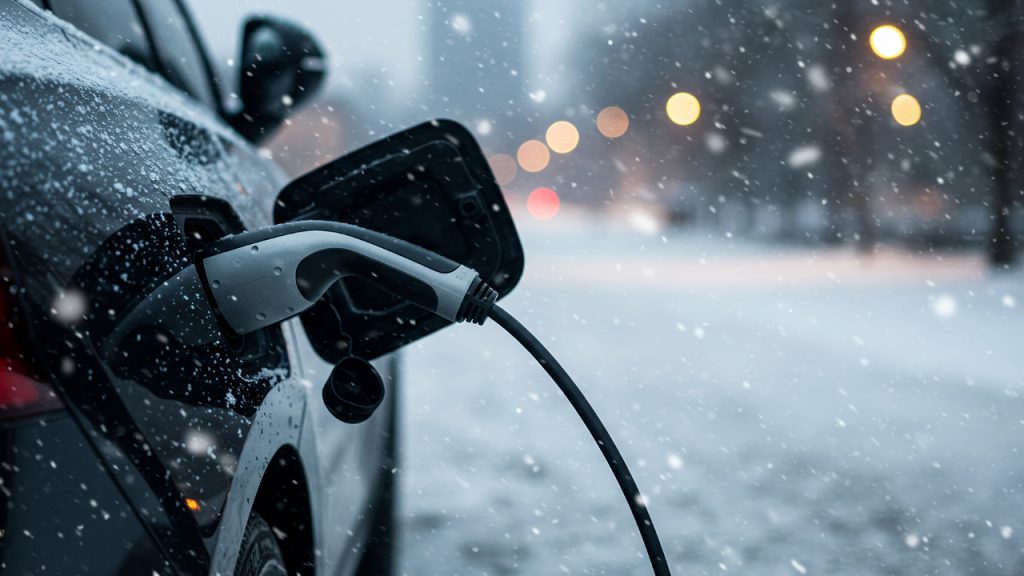
The Winter Range Crisis: Why Cold Weather Devastates EV Performance
The Physics of Cold-Weather Battery Degradation
Lithium-ion batteries face multiple challenges in cold weather that compound to create dramatic range loss:
Chemical Reaction Slowdown: At -20°C, lithium-ion battery internal resistance increases by 300-400% compared to optimal 25°C operating temperature. This means the battery can deliver less power and accepts charging more slowly.
Viscosity Changes: Battery electrolyte becomes more viscous in cold temperatures, reducing ion mobility between anode and cathode. This effectively reduces available capacity by 20-30% even before considering heating loads.
Regenerative Braking Limitations: Cold batteries cannot accept high charging currents, forcing the vehicle to use mechanical brakes instead of regenerative braking. This eliminates 15-25% of the range recovery that EVs normally achieve in mild weather.
Heating Energy Consumption: The largest impact comes from cabin heating. A traditional resistive heater can consume 3-6 kW continuously—equivalent to driving at highway speeds in terms of energy draw.
Real-World Winter Range Data from Chinese EVs
Recent testing by Norwegian automotive authorities (NAF) and Canadian cold-weather EV studies provide sobering data:
Without Heat Pump Systems: - BYD Dolphin (2022 model, no heat pump): 58% range loss at -10°C - Geely Geometry C (resistive heating): 52% range loss at -15°C - SAIC MG4 (base model): 47% range loss at -8°C
With Advanced Heat Pump Systems: - BYD Seal (heat pump equipped): 28% range loss at -10°C - NIO ET5 (heat pump + battery preheating): 23% range loss at -15°C - XPeng P7 (intelligent thermal management): 26% range loss at -12°C - Li Auto L9 (range extender + heat pump): 18% range loss at -10°C
The difference is stark: a heat pump system can reduce winter range loss by 20-30 percentage points, transforming a vehicle from marginally usable to genuinely practical in cold climates.
Heat Pump Technology Explained: The Game-Changing Difference
How Automotive Heat Pumps Work
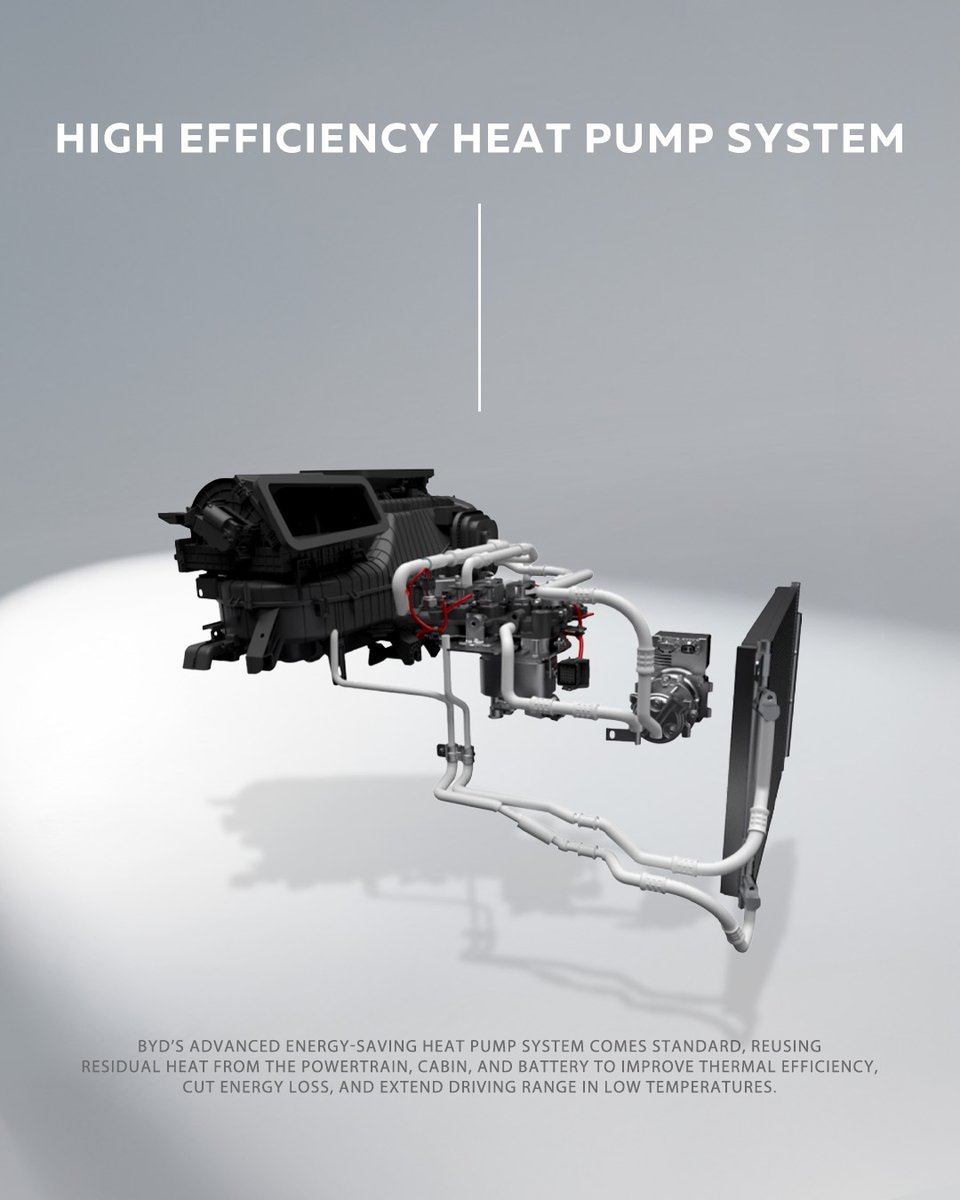
Unlike resistive heaters that convert electricity directly to heat (100% efficiency at best), heat pumps move existing heat from one place to another, achieving 200-300% efficiency (coefficient of performance, or COP, of 2-3).
The Basic Cycle: 1. Refrigerant Compression: An electric compressor pressurizes refrigerant, raising its temperature 2. Heat Exchange: Hot refrigerant flows through cabin heat exchanger, warming interior air 3. Expansion: Refrigerant expands and cools dramatically 4. External Heat Absorption: Cold refrigerant absorbs heat from outside air, battery coolant, or motor waste heat 5. Cycle Repeats: Refrigerant returns to compressor
Multiple Heat Sources: Advanced Chinese EV heat pumps can scavenge heat from: - Ambient air (down to -15°C) - Battery pack waste heat - Motor and inverter waste heat - Coolant system residual heat - Even recovered brake heat
Chinese Innovations in Heat Pump Technology
Chinese EV manufacturers have developed several proprietary innovations that surpass many European and American implementations:
BYD's Dual-Loop Heat Pump System: BYD's latest heat pump design (found in Seal, Han EV 2023+, and Tang EV) uses separate refrigerant loops for cabin heating and battery thermal management. This allows simultaneous battery warming and cabin heating without compromising either function.
NIO's Intelligent Heat Pump with AI Prediction: NIO's system uses navigation data and weather forecasts to pre-condition the battery and cabin before departure. If the vehicle knows you'll be driving in -15°C weather in 30 minutes, it begins warming the battery while still plugged in, preserving range.
XPeng's Ultra-Low Temperature Heat Pump: XPeng's third-generation heat pump (P7i, G9) maintains COP above 2.0 even at -25°C by using a variable-speed compressor and multi-stage heat exchange. Traditional heat pumps lose effectiveness below -15°C; XPeng's system remains efficient to -30°C.
Li Auto's Range-Extender Advantage: Li Auto's EREV (Extended Range Electric Vehicle) architecture provides a unique solution: the gasoline range extender generates substantial waste heat that can be captured for cabin heating, eliminating the range penalty entirely in extreme cold.
Brand-by-Brand Analysis: Who Has Mastered Winter Performance?
Tier 1: Excellent Cold-Weather Performance
BYD (比亚迪) - Heat Pump Standard on Premium Models
BYD equips heat pumps as standard on: - Seal (all variants) - Han EV (2023+ models) - Tang EV (2023+ models) - Denza D9 (luxury MPV)
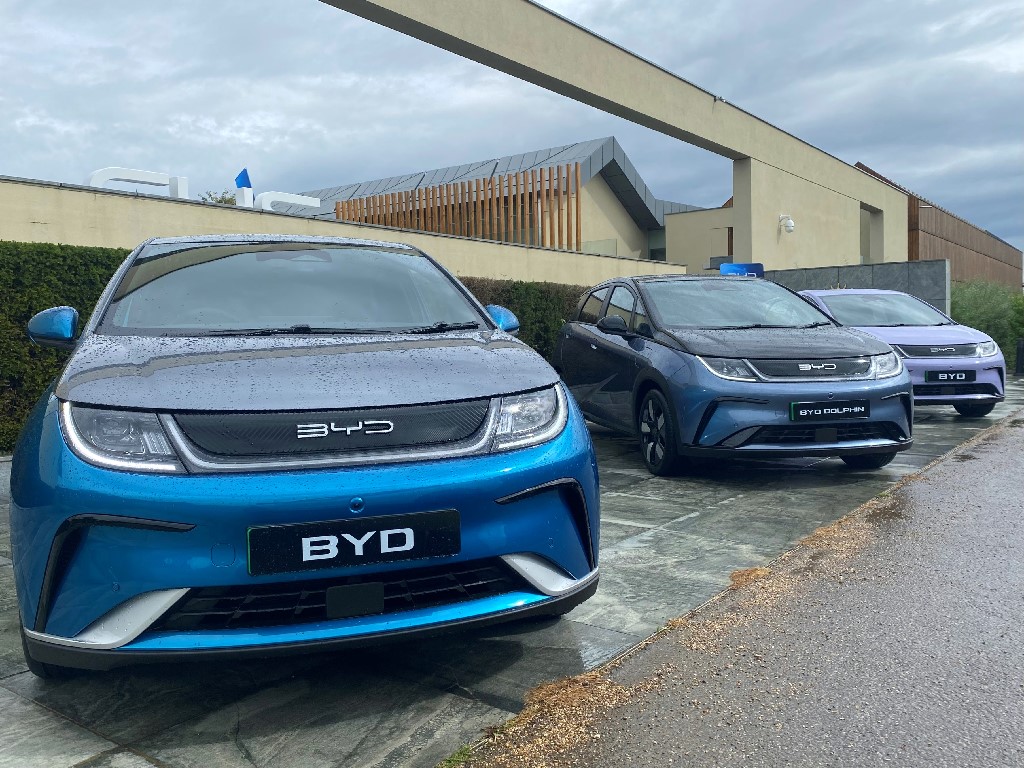
Winter Performance: BYD's heat pump systems achieve 25-30% range loss at -10°C, compared to 45-50% for earlier models without heat pumps. The Seal has been particularly praised in Scandinavian markets for maintaining usable range in Norwegian winters.
Export Consideration: When sourcing used BYD vehicles, verify the production date. 2021-2022 models often lack heat pumps; 2023+ models include them as standard on premium trims.
NIO (蔚来) - Comprehensive Thermal Management
NIO's approach combines heat pumps with battery swap infrastructure: - All ET series (ET7, ET5, ET5T) include advanced heat pumps - ES series SUVs (ES7, ES8, ES6) feature heat pumps standard - Battery swap allows pre-warmed battery installation in extreme cold
Winter Performance: NIO achieves 20-25% range loss at -15°C, among the best in the industry. The battery swap advantage means users can swap to a pre-warmed battery, eliminating cold-start range penalties.
Export Consideration: NIO's battery swap infrastructure is China-specific. Export markets lose this advantage, but the heat pump system alone still provides excellent winter performance.
XPeng (小鹏) - Technology-First Approach
XPeng has made heat pumps standard across its entire lineup since 2022: - P7/P7i sedan - G9 flagship SUV - G6 mid-size SUV - P5 compact sedan
Winter Performance: XPeng's third-generation heat pump maintains 25-28% range loss at -12°C. The G9, with its 800V architecture and large battery, is particularly well-suited for cold climates.
Export Consideration: XPeng's software-heavy approach means OTA updates can improve thermal management over time. Ensure vehicles have latest firmware before export.
Tier 2: Good Cold-Weather Performance (Heat Pump Optional or Recent Addition)
Li Auto (理想) - Range Extender Advantage
Li Auto's EREV models (L7, L8, L9) use gasoline range extenders that generate waste heat: - Heat pump system for electric-only operation - Engine waste heat for extended range mode - Minimal range loss in extreme cold when using range extender
Winter Performance: 15-20% range loss in electric mode, nearly zero range loss when range extender operates. This makes Li Auto vehicles exceptionally practical for cold climates.
Export Consideration: Gasoline availability makes these vehicles more versatile for markets with limited charging infrastructure. However, they're technically PHEVs, not pure EVs, which may affect import regulations.
Zeekr (极氪) - Geely's Premium Heat Pump Implementation
Zeekr 001 and 009 include sophisticated heat pump systems: - Dual-source heat pump (air + coolant) - Integrated with 800V fast charging for rapid battery warming - Pre-conditioning while DC fast charging
Winter Performance: 26-30% range loss at -10°C, improving with firmware updates.
Export Consideration: Zeekr is Geely's premium brand with excellent build quality. Limited service network outside China may be a concern.
Tier 3: Adequate Performance (Resistive Heating or Basic Heat Pumps)
SAIC (MG Brand) - Cost-Focused Approach
MG4, MG5, and ZS EV use resistive heating in base models: - Heat pump available only on top trims (market-dependent) - Significant winter range loss without heat pump option
Winter Performance: 45-50% range loss at -10°C without heat pump; 30-35% with heat pump option.
Export Consideration: MG has strong European presence and service network. Verify heat pump inclusion before purchase for cold-climate markets.
BYD Dolphin and Seagull - Entry-Level Compromises
BYD's budget models sacrifice heat pumps for affordability: - Dolphin: Heat pump optional (not standard) - Seagull: Resistive heating only
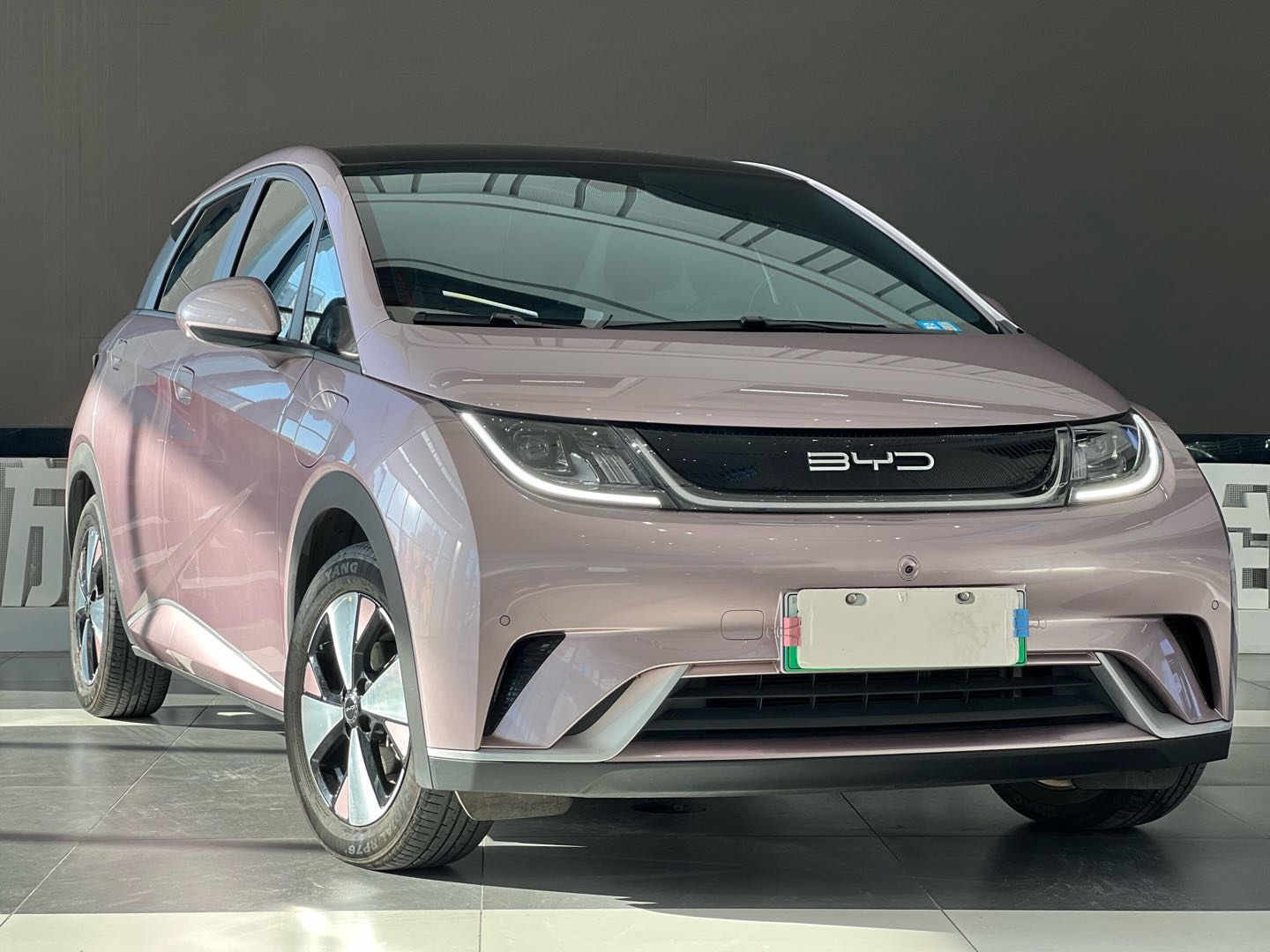
Winter Performance: 48-55% range loss at -10°C without heat pump.
Export Consideration: Excellent value for mild-climate markets (Mediterranean, Southeast Asia), but problematic for Nordic or Canadian markets without heat pump option.
Regional Suitability: Matching Vehicles to Climate Zones
Extreme Cold Climates (-20°C to -40°C): Nordic Countries, Canada, Russia
Recommended Vehicles: 1. Li Auto L7/L8/L9: Range extender eliminates cold-weather anxiety 2. NIO ET7 with 100kWh battery: Large battery + excellent heat pump 3. XPeng G9 with 98kWh battery: 800V charging + advanced heat pump 4. BYD Seal with 82kWh battery: Proven Scandinavian performance
Critical Features: - Heat pump system (non-negotiable) - Battery capacity >75kWh (to maintain usable range after 30% loss) - Battery pre-conditioning capability - Heated seats, steering wheel, and windshield (reduce cabin heating load)
Avoid: - Any vehicle without heat pump - Small-battery variants (<60kWh) - Vehicles without battery thermal management
Moderate Cold Climates (-10°C to -20°C): Northern Europe, Northern US, Japan
Recommended Vehicles: 1. BYD Seal, Han EV (2023+ with heat pump) 2. XPeng P7i, G6 3. NIO ET5, ES6 4. Zeekr 001
Critical Features: - Heat pump system (highly recommended) - Battery capacity >60kWh - Fast charging capability (for mid-trip warming)
Acceptable Alternatives: - MG4 with heat pump option - BYD Dolphin with heat pump option (for urban use only)
Mild Cold Climates (0°C to -10°C): Southern Europe, Coastal Regions
Recommended Vehicles: - Most Chinese EVs perform adequately - Heat pump still beneficial but not critical - Focus on value and features rather than cold-weather specialization
Good Options: - BYD Dolphin, Seal - MG4, ZS EV - XPeng P5 - Geely Geometry series
Practical Buyer's Checklist: Verifying Heat Pump Systems
When sourcing used Chinese EVs for cold-climate export, use this verification checklist:
Documentation Verification
1. Check Vehicle Specification Sheet: - Look for "热泵空调" (heat pump air conditioning) in Chinese specs - Verify model year and trim level (heat pumps often added mid-cycle) - Cross-reference with manufacturer's official specifications
2. VIN Decoding: - Use Chinese VIN decoders to verify exact configuration - Heat pump presence may be indicated in option codes
3. Owner's Manual: - Heat pump-equipped vehicles have specific pre-conditioning instructions - Look for "battery warming" or "remote climate control" features
Physical Inspection
1. Under-Hood Inspection: - Heat pump systems have visibly larger HVAC units - Look for additional refrigerant lines (heat pumps have more complex plumbing) - Compressor should be larger than standard AC compressor
2. Software Verification: - Access vehicle settings menu - Look for "battery pre-conditioning" or "scheduled climate control" options - Heat pump vehicles typically show "heat pump mode" in climate control display
3. Test Drive in Cold Weather: - If possible, test in <5°C ambient temperature - Monitor energy consumption with climate control on - Heat pump vehicles should show 2-3 kW heating consumption vs. 4-6 kW for resistive heating
Common Misrepresentations
Beware of These Claims: - "All 2023 models have heat pumps" (not true for budget models) - "Heat pump can be retrofitted" (technically possible but economically impractical) - "Winter range loss is only 10-15%" (unrealistic without heat pump in sub-zero temperatures)
Cost-Benefit Analysis: Is Heat Pump Worth the Premium?
Purchase Price Premium
Heat pump-equipped variants typically cost: - ¥8,000-15,000 RMB ($1,100-2,100 USD) more when new - ¥5,000-10,000 RMB ($700-1,400 USD) premium in used market
Operating Cost Savings (Cold Climate)
For a vehicle driven 20,000 km/year in cold climate (4 months of winter):
Without Heat Pump: - Winter efficiency: 25 kWh/100km (due to heating load) - Winter electricity cost: ¥0.60/kWh × 25 kWh × 6,667 km = ¥10,000 RMB
With Heat Pump: - Winter efficiency: 18 kWh/100km (reduced heating load) - Winter electricity cost: ¥0.60/kWh × 18 kWh × 6,667 km = ¥7,200 RMB
Annual Savings: ¥2,800 RMB ($390 USD) Payback Period: 2-3 years
Resale Value Impact
In cold-climate markets, heat pump-equipped vehicles command: - 8-12% higher resale value - Faster sale times (higher demand) - Lower depreciation rates
Example: A 2-year-old BYD Seal with heat pump retains 68% of original value in Norway, vs. 58% for non-heat pump equivalent.
Future Trends: Next-Generation Thermal Management
Emerging Technologies in Chinese EVs
1. Solid-State Battery Integration: Solid-state batteries (expected 2026-2027 from NIO, BYD) have better cold-weather performance inherently, reducing heat pump dependency.
2. AI-Powered Predictive Heating: XPeng and NIO are developing systems that learn user patterns and pre-condition vehicles with minimal energy waste.
3. Waste Heat Recovery from 800V Systems: Higher voltage systems generate more waste heat from power electronics, which can be captured for cabin heating.
4. Bi-Directional Charging Integration: V2L (Vehicle-to-Load) systems can power external heaters, reducing battery drain for cabin heating.
Regulatory Drivers
EU Cold-Weather Testing Requirements: New EU regulations (2025+) require realistic cold-weather range testing, forcing manufacturers to prioritize thermal management.
Chinese GB Standards Update: China's national standards are being updated to include cold-weather performance metrics, driving domestic innovation.
Actionable Recommendations for Exporters and Buyers
For Export Businesses Targeting Cold-Climate Markets
1. Prioritize Heat Pump Models: Build inventory around BYD Seal, NIO ET series, XPeng P7/G9, and Li Auto EREV models.
2. Verify Before Purchase: Implement physical inspection protocols to confirm heat pump presence—don't rely solely on seller claims.
3. Market Positioning: Emphasize winter performance in marketing materials. Provide real-world range data for local climate conditions.
4. Service Network: Establish relationships with technicians trained in heat pump diagnostics. These systems require specialized knowledge.
5. Warranty Considerations: Heat pump systems have additional components (compressor, expansion valves, refrigerant lines) that may need warranty coverage.
For Individual Buyers in Cold Climates
1. Don't Compromise on Heat Pump: The 10-15% purchase premium is justified by 30-40% better winter range and higher resale value.
2. Prioritize Battery Size: In cold climates, choose the largest battery option available. A 75kWh battery with 30% winter loss still provides 52kWh usable—adequate for most daily needs.
3. Consider Range Extenders: If available in your market, Li Auto's EREV models eliminate cold-weather anxiety entirely.
4. Plan Charging Infrastructure: Home charging with pre-conditioning capability is essential. Warming the battery while plugged in preserves range.
5. Test Before Committing: If possible, rent or test drive the specific model in winter conditions before purchasing.
Conclusion: Heat Pumps Are Non-Negotiable for Cold Climates
The data is unequivocal: for markets where temperatures regularly drop below freezing, a heat pump system transforms a Chinese EV from a marginal proposition to a genuinely practical vehicle. The 20-30 percentage point reduction in winter range loss—from 50% down to 25%—is the difference between a vehicle that barely makes it through a winter commute and one that handles cold weather with confidence.
Chinese manufacturers have made remarkable progress in thermal management technology. BYD, NIO, XPeng, and Li Auto now offer heat pump systems that rival or exceed those from European premium brands, often at significantly lower price points. For export businesses and overseas buyers, understanding which models include these systems—and verifying their presence before purchase—is essential due diligence.
As the global EV market matures and expands into colder regions, thermal management will increasingly separate viable products from expensive disappointments. Chinese EVs with advanced heat pump systems are ready for this challenge. The question for buyers is simple: are you selecting vehicles that can handle your climate, or are you setting up customers for winter range disappointment?
For more insights on selecting the right Chinese EV for your market, explore our comprehensive guide to top affordable China used car models for city driving.
---
About WinMinCar: We specialize in connecting international buyers with quality Chinese electric vehicles, providing expert guidance on technical specifications, export compliance, and market suitability. Our team tests and evaluates vehicles across multiple climate zones to provide real-world performance data.