
When international buyers evaluate Chinese used EVs for export, one critical specification often gets overlooked: battery chemistry. The choice between Lithium Iron Phosphate (LFP) and Nickel Manganese Cobalt (NMC) batteries isn't just a technical detail—it fundamentally determines whether a vehicle will thrive or struggle in your target market's climate.
A BYD Seal with an LFP battery that performs brilliantly in Dubai's 45°C summers may disappoint Norwegian buyers facing -20°C winters. Conversely, an NIO ET7 with NMC batteries optimized for cold climates carries unnecessary cost and complexity for tropical markets. Understanding these chemistry differences is essential for export businesses, dealers, and overseas buyers making six-figure inventory decisions.
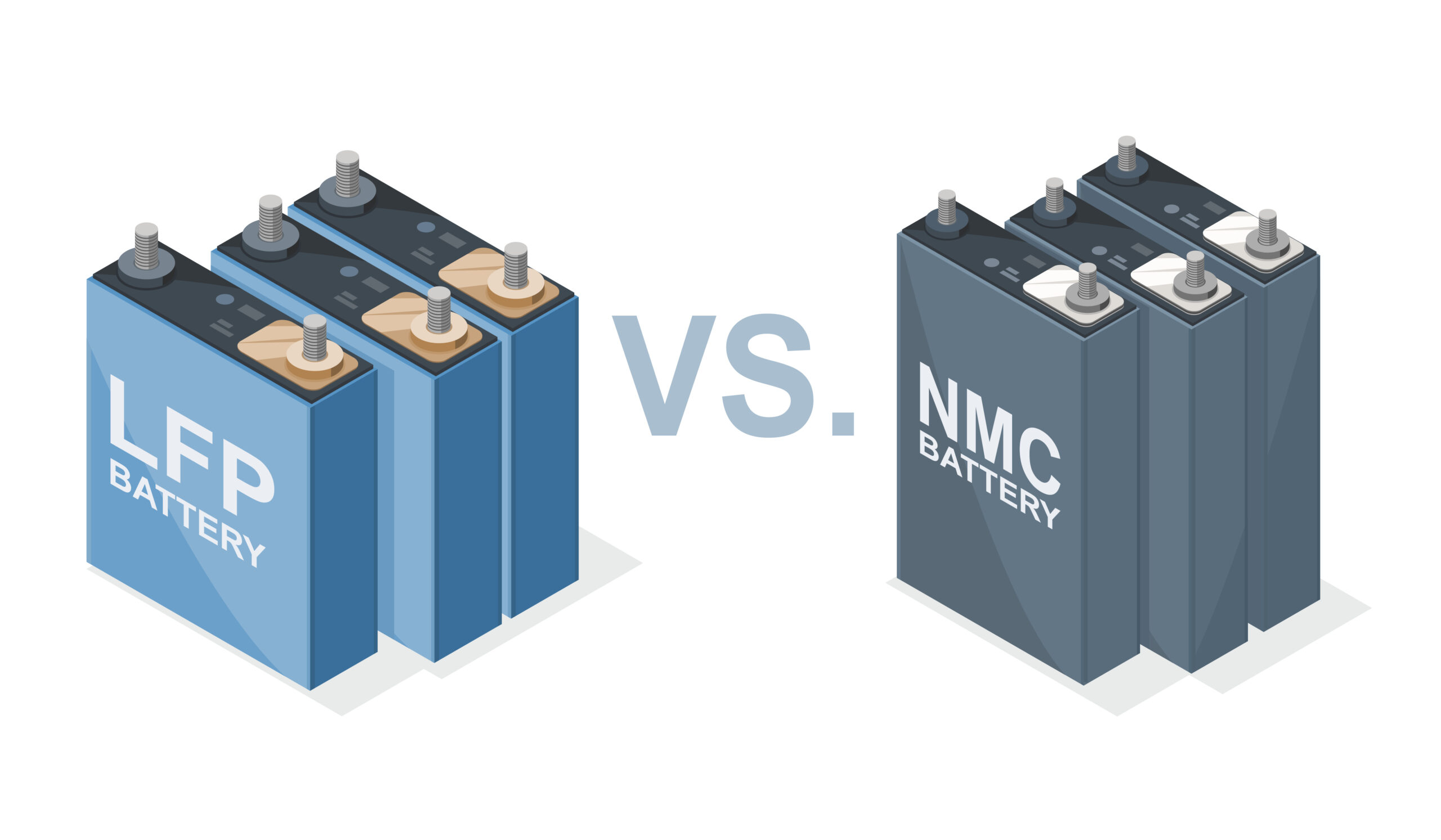
This comprehensive guide examines the fundamental differences between LFP and NMC battery technologies, analyzes how each performs across climate zones, identifies which Chinese EV brands use which chemistry, and provides actionable selection criteria for matching vehicles to regional markets.
Battery Chemistry Fundamentals: LFP vs. NMC Explained
Lithium Iron Phosphate (LFP / LiFePO₄)
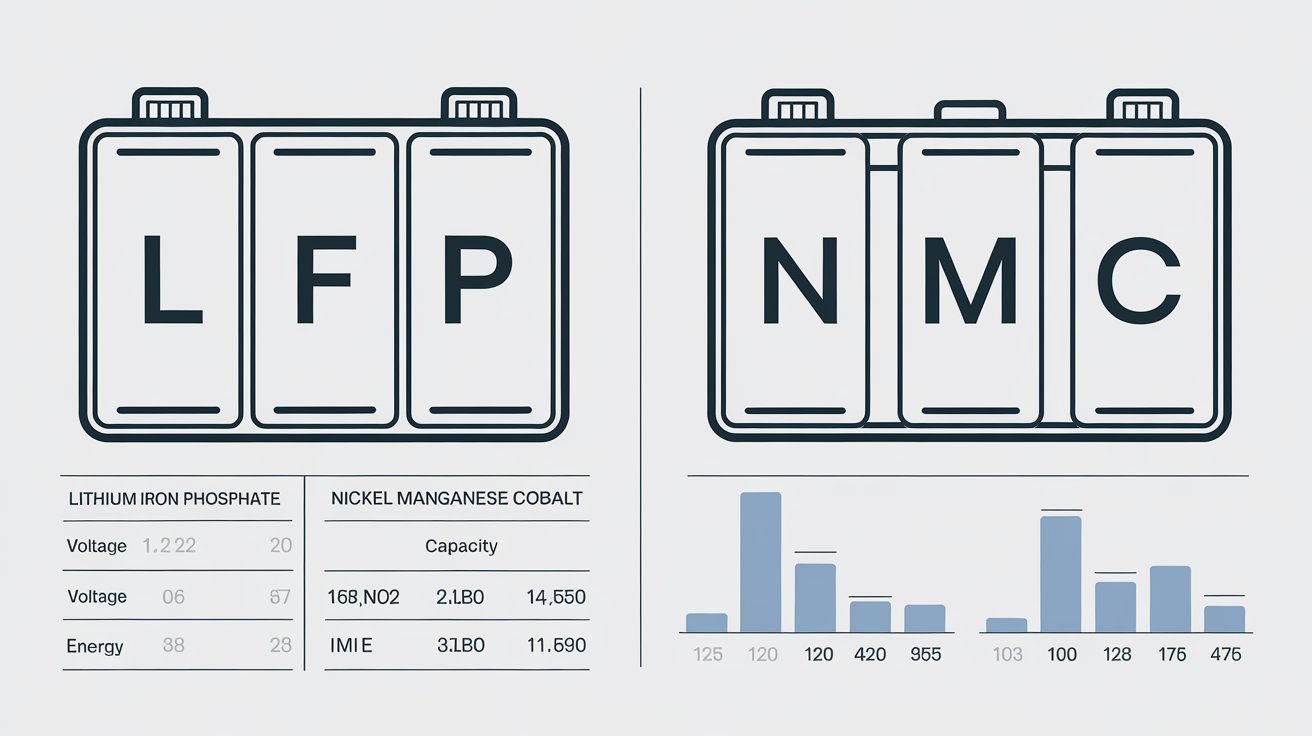
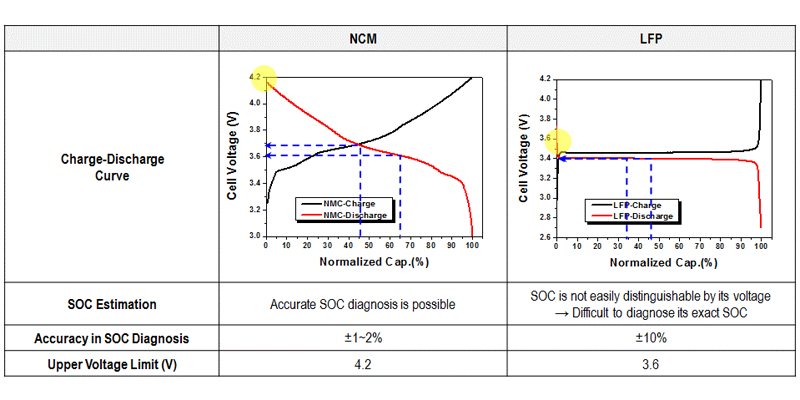
Chemical Composition: LiFePO₄ cathode, graphite anode Energy Density: 125-160 Wh/kg (pack level) Nominal Voltage: 3.2V per cell
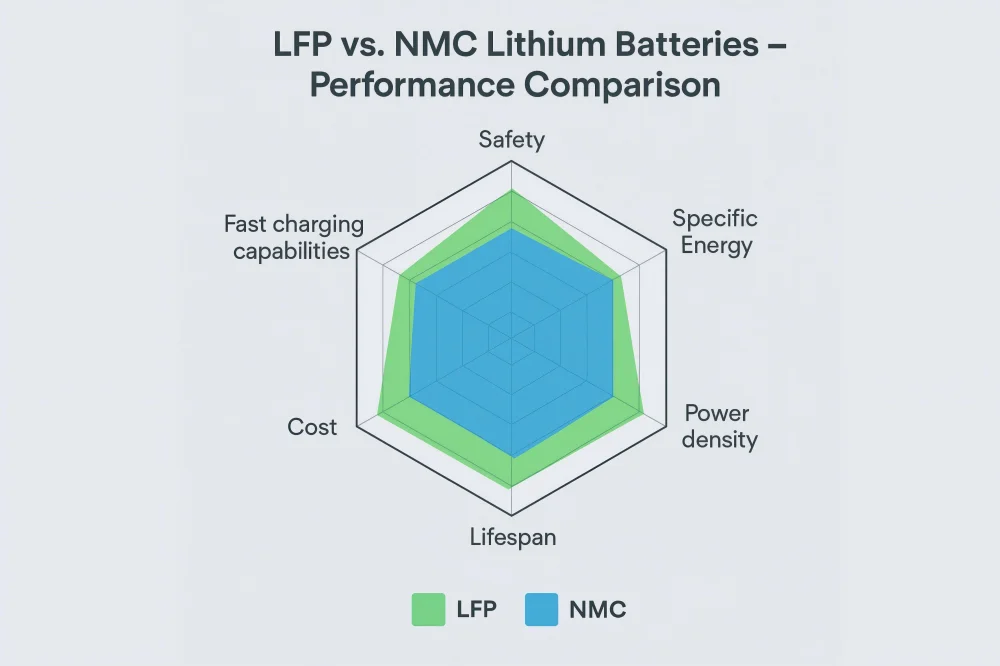
Key Characteristics: - Thermal Stability: Extremely stable; thermal runaway temperature >270°C - Cycle Life: 3,000-5,000 cycles to 80% capacity - Cost: 30-40% lower than NMC (no cobalt, less nickel) - Cold Weather Performance: Reduced capacity below 0°C - Fast Charging: Good tolerance for high charge rates - Safety: Inherently safer chemistry; lower fire risk
Chinese Innovation: BYD's Blade Battery represents the pinnacle of LFP technology, achieving 150 Wh/kg pack-level energy density through cell-to-pack integration, approaching NMC levels while maintaining LFP's safety and cost advantages.
Nickel Manganese Cobalt (NMC)
Chemical Composition: Various ratios (NMC 523, 622, 811) indicating nickel-manganese-cobalt proportions Energy Density: 180-250 Wh/kg (pack level) Nominal Voltage: 3.7V per cell
Key Characteristics: - Energy Density: 40-60% higher than LFP - Cold Weather Performance: Better low-temperature capacity retention - Cycle Life: 1,000-2,000 cycles to 80% capacity - Cost: Higher due to cobalt and nickel content - Thermal Management: Requires more sophisticated cooling - Weight: Lighter for equivalent range
Evolution: Modern NMC 811 (80% nickel, 10% manganese, 10% cobalt) maximizes energy density while reducing expensive cobalt content. CATL and Chinese manufacturers have achieved 250+ Wh/kg in latest generations.
Performance Across Climate Zones: The Critical Differences
Tropical & Hot Climates (25°C to 45°C): Middle East, Southeast Asia, Africa
LFP Advantages in Hot Climates:
1. Thermal Stability: LFP's inherent thermal stability means less aggressive cooling requirements. In Dubai's 45°C ambient temperatures, LFP batteries maintain safe operation without complex thermal management.
2. Longevity in Heat: High temperatures accelerate battery degradation, but LFP degrades 40-50% slower than NMC in sustained heat. A BYD Tang EV with LFP battery in Saudi Arabia retains 85% capacity after 5 years; equivalent NMC might drop to 75%.
3. Reduced Cooling Energy: LFP requires less active cooling, preserving 5-8% more range in hot weather compared to NMC vehicles running aggressive cooling systems.
4. Safety in Extreme Heat: LFP's thermal runaway temperature (>270°C) vs. NMC (180-210°C) provides crucial safety margin in markets where vehicles sit in 60°C+ cabin temperatures.
Real-World Data: - BYD Atto 3 (LFP) in Thailand: 92% capacity retention after 100,000 km over 3 years - NIO ES6 (NMC) in Singapore: 88% capacity retention after 80,000 km over 3 years - MG4 (LFP) in UAE: Minimal range loss in 45°C ambient temperatures
NMC Disadvantages in Hot Climates: - Faster degradation in sustained heat - Higher cooling energy consumption - Increased thermal management complexity - Slightly elevated fire risk in extreme temperatures
Verdict for Hot Climates: LFP is the clear winner. Lower cost, better longevity, and superior thermal stability make LFP ideal for tropical and desert markets.
Cold Climates (-20°C to 0°C): Nordic Countries, Canada, Russia, Northern China
NMC Advantages in Cold Climates:
1. Better Low-Temperature Capacity: At -20°C, NMC batteries retain 70-75% of rated capacity vs. 55-65% for LFP. This 10-15 percentage point difference is critical when winter already reduces range by 25-30%.
2. Faster Cold-Weather Charging: NMC accepts charge more readily in cold temperatures. At -10°C, NMC can charge at 60-70% of normal rate; LFP drops to 40-50%.
3. Lower Internal Resistance When Cold: NMC maintains better power delivery in cold weather, providing stronger acceleration and regenerative braking.
4. Weight Advantage: NMC's higher energy density means smaller, lighter battery packs for equivalent range—beneficial when winter range loss is inevitable.
Real-World Data: - NIO ET5 (NMC 100kWh) in Norway: 25% range loss at -15°C - BYD Seal (LFP 82kWh) in Norway: 32% range loss at -15°C - XPeng P7 (NMC) in Canada: Maintains usable range in -25°C conditions - Tesla Model 3 (LFP) in Finland: 38% range loss at -18°C vs. 28% for NMC variant
LFP Disadvantages in Cold Climates: - Significant capacity loss below 0°C - Slower charging in cold weather - Requires more aggressive battery heating (consuming range) - Reduced regenerative braking effectiveness
Verdict for Cold Climates: NMC has clear advantages, but modern LFP with excellent thermal management (BYD's latest systems) can be acceptable if battery size compensates for cold-weather losses.
Temperate Climates (-5°C to 25°C): Most of Europe, Coastal US, Japan, Southern China
Balanced Performance:
In temperate climates, both chemistries perform well, and the decision shifts to other factors:
LFP Advantages: - Lower purchase cost (¥20,000-40,000 RMB savings) - Longer lifespan (3,000+ cycles vs. 1,500-2,000 for NMC) - Better for high-mileage commercial use - Safer for urban environments
NMC Advantages: - Lighter weight (better efficiency) - Smaller physical size (more cabin/cargo space) - Better performance in occasional cold snaps - Higher resale value in premium segments
Verdict for Temperate Climates: Either chemistry works well. Choose LFP for cost-conscious, high-mileage, or commercial applications. Choose NMC for premium positioning, weight-sensitive applications, or occasional cold-weather use.
Brand-by-Brand Battery Chemistry Analysis
BYD (比亚迪): The LFP Champion
BYD's Blade Battery Strategy:
BYD has committed almost entirely to LFP chemistry across its lineup, leveraging its proprietary Blade Battery technology:
Blade Battery Vehicles: - Seal (all variants): 61.4 kWh, 82.5 kWh LFP - Han EV: 85.4 kWh LFP - Tang EV: 108.8 kWh LFP - Dolphin: 44.9 kWh, 60.5 kWh LFP - Atto 3: 49.92 kWh, 60.48 kWh LFP - Seagull: 30.08 kWh, 38.88 kWh LFP
Blade Battery Advantages: - Cell-to-pack design eliminates modules, increasing space efficiency - Achieves 150 Wh/kg pack density (approaching NMC levels) - Passes extreme nail penetration test without thermal runaway - 3,000+ cycle life (1.2 million km theoretical lifespan)
Market Suitability: - Excellent: Hot climates (Middle East, Southeast Asia, Africa, Southern China) - Good: Temperate climates (Europe, coastal regions) - Acceptable: Cold climates (with heat pump and large battery; e.g., Seal 82kWh, Tang 108kWh)
Export Consideration: BYD's LFP focus makes its vehicles ideal for hot-climate markets. For cold climates, ensure heat pump inclusion and choose larger battery variants.
NIO (蔚来): NMC for Performance and Flexibility
NIO's Battery Strategy:
NIO uses exclusively NMC chemistry across all models, prioritizing performance and cold-weather capability:
NMC Battery Options (via Battery-as-a-Service): - 75 kWh NMC pack (all models) - 100 kWh NMC pack (all models) - 150 kWh semi-solid-state (ET7, ES7, ET5T) - NMC-based
NMC Advantages for NIO: - Superior cold-weather performance (critical for premium positioning) - Higher energy density enables battery swap standardization - Better power delivery for performance variants - Lighter weight for handling dynamics
Market Suitability: - Excellent: Cold climates (Nordic, Canada, Russia, Northern China) - Excellent: Temperate climates (premium positioning) - Good: Hot climates (requires active thermal management, but NIO's system is sophisticated)
Export Consideration: NIO's NMC batteries and battery swap infrastructure make vehicles ideal for cold-climate premium markets. Higher cost justified by performance and flexibility.
XPeng (小鹏): NMC for Technology Leadership
XPeng's Battery Strategy:
XPeng uses NMC chemistry across its lineup, emphasizing fast charging and performance:
NMC Vehicles: - P7/P7i: 60.2 kWh, 80.9 kWh NMC - G9: 79.2 kWh, 98 kWh NMC (800V architecture) - G6: 66 kWh, 87.5 kWh NMC (800V architecture) - P5: 55.9 kWh, 66.2 kWh NMC
800V + NMC Synergy: - G9 and G6's 800V architecture combined with NMC enables 4C charging (80% in 15 minutes) - NMC's better high-rate charging tolerance maximizes 800V benefits - Lighter NMC packs improve efficiency of 800V system
Market Suitability: - Excellent: Cold and temperate climates (NMC + heat pump combination) - Excellent: Markets with 800V charging infrastructure - Good: Hot climates (requires thermal management, but 800V reduces charging heat generation)
Export Consideration: XPeng's NMC + 800V combination is ideal for technology-forward markets with developing ultra-fast charging infrastructure.
Li Auto (理想): NMC for Range-Extended Efficiency
Li Auto's Battery Strategy:
Li Auto uses smaller NMC batteries in its EREV (Extended Range Electric Vehicle) architecture:
NMC in EREV: - L7: 42.8 kWh NMC - L8: 42.8 kWh NMC - L9: 44.5 kWh NMC
Why NMC for EREV: - Smaller battery size (100-150 km electric range) benefits from NMC's higher energy density - Weight savings critical for EREV efficiency - Better cold-weather performance when battery is primary power source - NMC's higher voltage matches well with range extender system
Market Suitability: - Excellent: All climates (range extender eliminates climate-related range anxiety) - Excellent: Markets with limited charging infrastructure - Excellent: Cold climates (range extender provides heating without range penalty)
Export Consideration: Li Auto's EREV architecture makes battery chemistry less critical, but NMC choice optimizes weight and cold-weather performance.
CATL-Supplied Vehicles: Mixed Chemistry
Many Chinese EVs use CATL (Contemporary Amperex Technology Co. Limited) batteries:
CATL LFP Customers: - Tesla Model 3/Y (standard range, China-made) - Volkswagen ID.3/ID.4 (some variants, China-made) - Geely Geometry series
CATL NMC Customers: - NIO (all models) - XPeng (all models) - Li Auto (all models) - BMW iX3 (China-made) - Mercedes EQE/EQS (some variants, China-made)
CATL's Qilin Battery (3rd generation cell-to-pack): - Available in both LFP and NMC versions - LFP Qilin: 160 Wh/kg (13% improvement over previous LFP) - NMC Qilin: 255 Wh/kg (industry-leading)
Cost Analysis: Total Cost of Ownership by Climate
Purchase Price Differential
New Vehicle Price Premium (NMC vs. LFP): - Equivalent range: NMC costs ¥30,000-50,000 RMB ($4,200-7,000 USD) more - Equivalent battery size: NMC costs ¥40,000-60,000 RMB ($5,600-8,400 USD) more
Used Vehicle Price Premium: - 2-year-old vehicle: NMC retains 5-8% higher value - 5-year-old vehicle: LFP may retain higher value (better cycle life)
Operating Costs by Climate
Hot Climate (Dubai, 30,000 km/year, 5 years):
LFP Vehicle (BYD Seal 82kWh): - Purchase price: ¥210,000 RMB - Electricity cost (5 years): ¥18,000 RMB - Battery degradation: 15% (85% capacity remaining) - Resale value (5 years): ¥105,000 RMB (50% retention) - Total Cost of Ownership: ¥123,000 RMB
NMC Vehicle (NIO ET5 75kWh): - Purchase price: ¥258,000 RMB - Electricity cost (5 years): ¥17,500 RMB (slightly more efficient) - Battery degradation: 22% (78% capacity remaining) - Resale value (5 years): ¥116,000 RMB (45% retention, degradation concern) - Total Cost of Ownership: ¥159,500 RMB
TCO Advantage: LFP saves ¥36,500 RMB ($5,100 USD) over 5 years in hot climates
Cold Climate (Norway, 25,000 km/year, 5 years):
LFP Vehicle (BYD Seal 82kWh): - Purchase price: ¥210,000 RMB - Electricity cost (5 years): ¥22,000 RMB (higher winter consumption) - Battery degradation: 18% (82% capacity remaining) - Winter range anxiety: Moderate (32% winter loss) - Resale value (5 years): ¥95,000 RMB (45% retention, cold-weather concern) - Total Cost of Ownership: ¥137,000 RMB
NMC Vehicle (NIO ET5 100kWh): - Purchase price: ¥298,000 RMB - Electricity cost (5 years): ¥24,000 RMB (larger battery, better winter efficiency) - Battery degradation: 20% (80% capacity remaining) - Winter range anxiety: Low (25% winter loss) - Resale value (5 years): ¥149,000 RMB (50% retention, premium positioning) - Total Cost of Ownership: ¥173,000 RMB
TCO Advantage: LFP saves ¥36,000 RMB, but NMC provides significantly better winter usability
Verdict: In hot climates, LFP is both cheaper and better. In cold climates, NMC costs more but delivers substantially better user experience.
Practical Selection Guide: Matching Chemistry to Market
Decision Matrix for Export Businesses
Choose LFP When: - Target market has average temperatures >15°C year-round - Cost competitiveness is primary concern - High-mileage commercial use (taxis, ride-sharing, delivery) - Safety and longevity are key selling points - Target market has limited fast-charging infrastructure (LFP tolerates slower charging well)
Choose NMC When: - Target market experiences temperatures <0°C regularly - Premium positioning and performance are priorities - Fast charging capability is essential (especially with 800V systems) - Weight and efficiency are critical (urban markets with tight parking) - Target market values technology and specifications
Regional Recommendations
Middle East & North Africa: - Primary: BYD (all LFP models), MG4 (LFP), Geely Geometry (LFP) - Secondary: NIO, XPeng (if premium positioning justifies cost) - Avoid: Small-battery NMC vehicles (degradation concern in heat)
Southeast Asia: - Primary: BYD Dolphin/Atto 3 (LFP, cost-effective), MG4 (LFP) - Secondary: XPeng P5 (NMC, if fast charging available) - Avoid: Large-battery NMC (unnecessary cost for climate)
Nordic Countries (Norway, Sweden, Finland): - Primary: NIO ET5/ET7 (NMC, excellent cold performance), XPeng G9 (NMC + 800V) - Secondary: BYD Seal 82kWh (LFP, acceptable with heat pump) - Avoid: Small-battery LFP vehicles (<60kWh)
Canada: - Primary: Li Auto L7/L8/L9 (NMC + range extender), NIO ET5/ET7 (NMC) - Secondary: XPeng P7i/G9 (NMC), BYD Tang (LFP, large battery compensates) - Avoid: Budget LFP models without heat pumps
Europe (Temperate): - Primary: Either chemistry works; choose based on price positioning - Value Segment: BYD Seal/Dolphin (LFP) - Premium Segment: NIO, XPeng (NMC) - Commercial: BYD (LFP, longevity advantage)
Australia: - Northern Australia (hot): BYD (LFP), MG4 (LFP) - Southern Australia (temperate): Either chemistry, choose based on features - Outback/Rural: Li Auto (range extender eliminates range anxiety)
Future Trends: Next-Generation Battery Technologies
Emerging Chemistries
LMFP (Lithium Manganese Iron Phosphate): - Hybrid of LFP and NMC characteristics - 15-20% higher energy density than LFP - Better cold-weather performance than LFP - Maintains LFP's safety and longevity - Expected: BYD and CATL production 2026-2027
Sodium-Ion Batteries: - CATL's first-generation sodium-ion: 160 Wh/kg - Excellent cold-weather performance (-20°C with minimal degradation) - No lithium, cobalt, or nickel (lowest cost) - Expected: Budget Chinese EVs 2026-2027
Semi-Solid-State (NIO's 150kWh): - 360 Wh/kg energy density - NMC-based with solid-state electrolyte - Better safety than liquid electrolyte NMC - Available Now: NIO ET7, ES7, ET5T (premium option)
Full Solid-State: - 400-500 Wh/kg projected - Excellent safety and temperature performance - Expected: 2028-2030 for mass production
Climate Adaptation Strategies
BYD's Approach: Improve LFP cold-weather performance through: - Advanced thermal management systems - Larger battery sizes to compensate for cold losses - Cell-to-pack efficiency gains
NIO/XPeng Approach: Optimize NMC for all climates through: - Sophisticated battery thermal management - AI-powered preconditioning - Battery swap (NIO) for pre-warmed batteries
Actionable Recommendations
For Export Businesses
1. Climate-First Selection: Build inventory based on target market climate, not just vehicle features.
2. Diversify Chemistry: Maintain both LFP and NMC inventory to serve different market segments.
3. Educate Customers: Provide climate-specific performance data. Don't oversell LFP to cold-climate buyers or NMC to hot-climate buyers.
4. Warranty Considerations: LFP's longer cycle life may justify extended warranties in hot climates.
5. Resale Value Positioning: In hot climates, emphasize LFP's longevity. In cold climates, emphasize NMC's performance.
For Individual Buyers
1. Prioritize Climate Match: Your local climate should be the primary factor in chemistry selection.
2. Don't Overpay for Unnecessary NMC: If you're in a hot climate, LFP's lower cost and better longevity make it the smart choice.
3. Don't Compromise in Cold Climates: NMC's cold-weather advantages justify the premium if you regularly face sub-zero temperatures.
4. Consider Usage Patterns: High-mileage users benefit more from LFP's cycle life. Performance-focused users benefit from NMC's power delivery.
5. Future-Proof for Resale: Consider your market's preferences. Premium markets value NMC; cost-conscious markets value LFP.
Conclusion: Chemistry Matters More Than You Think
Battery chemistry is not a minor technical specification—it's a fundamental determinant of vehicle suitability for different global markets. The 30-40% cost advantage and superior longevity of LFP make it ideal for hot climates, while NMC's cold-weather performance and energy density justify its premium in Nordic and Canadian markets.
Chinese EV manufacturers have become global leaders in both chemistries. BYD's Blade Battery has elevated LFP to near-NMC energy density while maintaining safety and cost advantages. CATL's Qilin battery pushes both LFP and NMC to new performance levels. NIO and XPeng's sophisticated thermal management systems maximize NMC's potential across all climates.
For export businesses and overseas buyers, understanding these chemistry differences is essential due diligence. Matching battery chemistry to climate isn't just about optimizing performance—it's about ensuring customer satisfaction, minimizing warranty claims, and maximizing resale value. The right chemistry in the right climate transforms a good vehicle into an excellent one. The wrong chemistry can turn a premium EV into a disappointing investment.
For more insights on selecting Chinese EVs for your specific market, explore our guide to top affordable China used car models for city driving.
---
About WinMinCar: We provide expert guidance on Chinese EV selection, with deep technical knowledge of battery chemistries, thermal management systems, and climate-specific performance. Our team evaluates vehicles across multiple climate zones to provide real-world suitability data for international markets.